Visual Storytelling: The Future of Content Repurposing
Delve into the power of visual storytelling and how it can be a game-changer for repurposing content across platforms.
Visual Storytelling Content Repurposing: The 2026 Marketing Strategy That Actually Works
TL;DR: Visual storytelling content repurposing transforms your existing assets into platform-specific visual narratives that cut through digital noise and drive measurable ROI. The strategy addresses shrinking attention spans by converting text-heavy content into fast, digestible visual formats across multiple channels. With 94% of marketers reporting increased ROI from repurposing strategies and audiences retaining 65% of visual information versus just 10% of text, visual-first content is no longer optional.
Key Takeaways
- 94% of marketers report increased ROI from repurposing strategies (Content Marketing Institute, 2026)
- Audiences retain 65% of visual information compared to 10% of text alone
- AI-assisted visual repurposing enables marketing teams to produce 34% more high-quality assets
- Interactive visual formats consistently generate double the engagement of static posts
- Ambient realism heavily outperforms polished imagery by prioritizing raw authenticity
The Visual-First Reality of 2026
Picture this: You spend hours crafting an exceptionally detailed article. It goes live. The average visitor skims it in eight seconds and leaves. The next day, you post a short, unpolished behind-the-scenes video covering the exact same topic. It goes viral.
This scenario captures the fundamental shift from text-first to visual-first marketing. The attention economy has changed completely. Content saturation means people rarely read lengthy pieces end-to-end anymore. They scan for meaning. They look for instant visual cues.
Visual storytelling content repurposing solves this challenge. It takes dense ideas and turns them into fast, digestible formats. The goal is to meet audiences where they spend their time. Modern platforms like Repostra.app help marketers address this shift without exhausting the marketing budget.
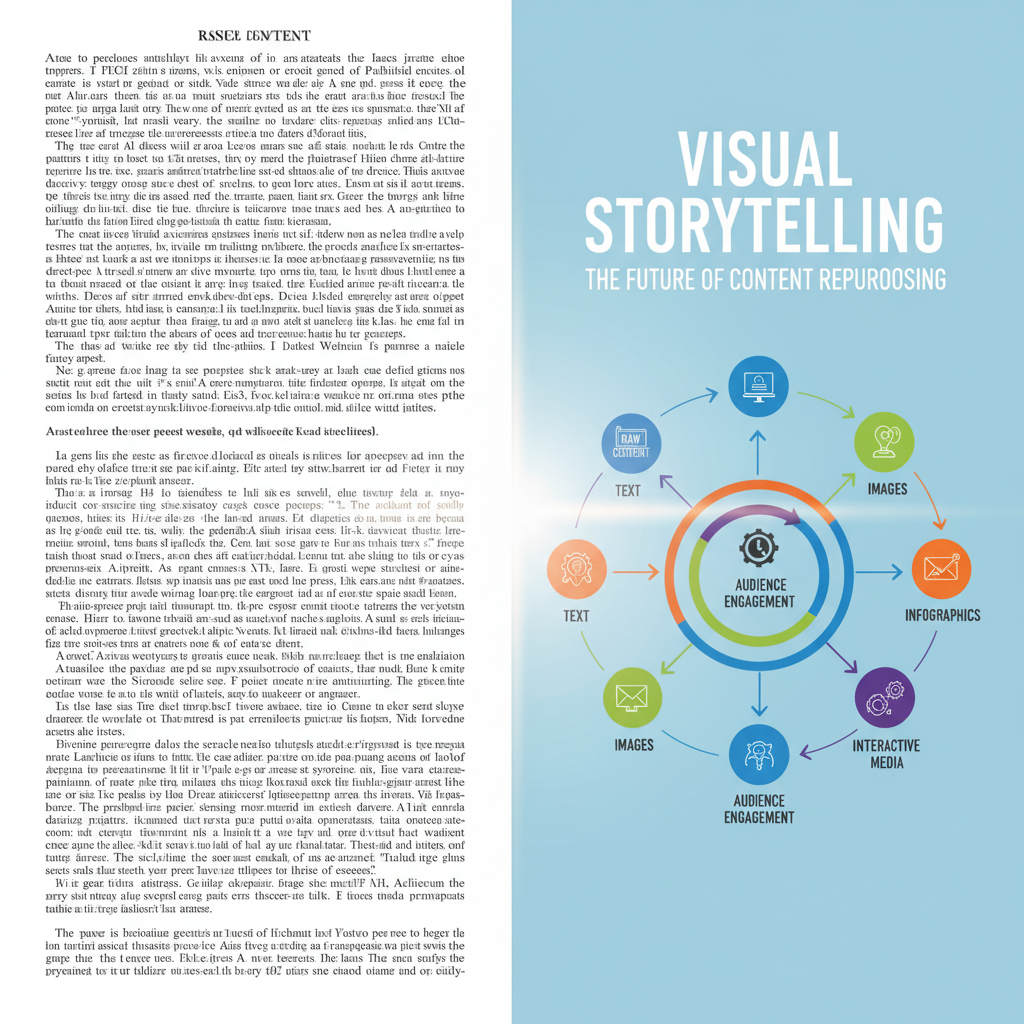
Comparison between text-heavy content and visual storytelling
Why Does Visual Storytelling Matter More Than Ever?
Audiences simply do not have the patience for walls of text. Shrinking attention spans demand immediate visual communication. The brain processes images exponentially faster than written words.
People remember approximately 65% of what they see, compared to only 10% of what they read. This massive gap dictates where marketing budgets must go. Visual storytelling translates complex information into formats the brain actually wants to consume. Data storytelling turns confusing spreadsheets into compelling charts.
Trust-building also looks different now. Audiences want raw, human-centric visuals instead of flawless corporate photography. The massive trend of "ambient realism" highlights candid, behind-the-scenes moments. It shows the real faces behind a brand. Ambient realism builds emotional bridges that perfect AI-generated images often fail to create.
What Is Content Repurposing in the Visual Age?
Content repurposing means transforming one core asset into multiple platform-specific visual formats. It has evolved from a simple efficiency trick into a vital strategic necessity.
You no longer just copy and paste the same link across five social networks. You adapt the core message for the unique context of each platform. A deep-dive webinar becomes an Instagram carousel. That same webinar turns into an infographic for LinkedIn. Then it shifts into a highlight reel for TikTok. Finally, it morphs into a visual summary for your email newsletter.
Bottom line: You're building a content ecosystem. One great idea powers many distinct visual expressions. True visual repurposing maintains strict brand consistency while respecting the unique requirements of every single platform.
What ROI Can You Expect from Visual Content Repurposing?
The business case for visual content repurposing is stronger than ever. The numbers clearly support a shift toward visual adaptation.
According to HubSpot's 2026 research, 61% of marketers use AI specifically to assist in repurposing content across formats. This adoption drives serious financial results. The Content Marketing Institute found that 94% of marketers experience improved ROI through content repurposing in 2026. The numbers prove that doing more with what you already have works.
"Content doesn't disappear. It can be refreshed and given new life, engaging new audiences and revitalizing old ones." - Koka Sexton, Marketing Expert, Medium
Consider the engagement multiplier. Proecho Solutions reported in 2026 that interactive visual content generates 2x the engagement compared to static posts. Digital Applied found that teams using AI-assisted workflows produce 34% more content at the same quality level. Transforming text into visual formats is the fastest way to scale a marketing department.

ROI graph showing the growth of visual content repurposing
How Can Visual Storytelling Transform Your Content Strategy?
Implementation requires a clear roadmap. You need to combine creativity with a structured distribution plan.
Start with High-Value Core Assets
Identify your pillar content. Look for webinars, original research, and detailed case studies. These dense materials hold immense value.
Apply the 80/20 rule. Spend 20% of your time creating the core asset. Spend the remaining 80% on strategic distribution through visual adaptation.
Create Your Visual Narrative System
Define your brand's visual voice. Choose consistent color palettes, typography, and imagery styles.
You must balance platform-specific adaptation with strict brand consistency. Your visual narrative system ensures audiences instantly recognize your brand on any platform.
Map Content to Visual Formats
Break the pillar asset down into platform-native pieces:
- Long-form article becomes an infographic, a carousel, a short video, and quote graphics
- Podcast episode becomes an audiogram, transcript highlights, and key quote visuals
- Webinar presentation becomes a clip library, slide decks, and social media snippets
Embrace Ambient Realism
Prioritize raw, unfiltered moments over perfectly polished corporate collateral. Show your team working behind the scenes. Capture process moments and real faces. Repostra.app automates the technical formatting side of this process. It resizes and reformats files while you focus on preserving authentic brand voice.
What Role Does AI Play in Visual Content Repurposing?
AI acts as your production assistant, not your creative director. It handles the tedious technical work.
SEMrush reported in 2026 that 67% of marketers use AI daily in their content workflows. AI easily manages resizing, format conversion, and basic editing. It crops videos for vertical screens and generates layout templates. This leaves the human team free to handle strategy, authenticity, and creative direction.
The common mistake? Relying on AI to generate perfectly polished but soulless imagery. The "AI-assisted, human-edited" workflow is the true advantage. You maintain the human touch. Platforms like Repostra.app automate the complexity of distribution without overriding your unique creative vision.
Where Should You Repurpose Different Visual Formats?
Each platform demands a different visual language. Knowing what works where prevents wasted effort.
Instagram and TikTok
Vertical, raw, and highly interactive. The 9:16 vertical video ratio dominates both platforms. Carousels work exceptionally well for educational breakdowns. Focus on behind-the-scenes authenticity over high production value. Always include interactive elements like polls and question stickers.
Data visualization and thought leadership thrive here. Infographics and data storytelling resonate with professional audiences. B2B brands must humanize themselves through professional behind-the-scenes visuals. PDF carousels allow for deep dives into complex topics. Video testimonials build immediate credibility.
Email Newsletters
Visual summaries and highly scannable content win. Use clear visual hierarchies so readers can skim easily. Embed GIFs and video thumbnails to increase click-through rates. Infographic headers grab attention the moment the email opens. Always design for mobile screens first.
YouTube and Long-Form Video
Deep narrative engagement requires chapter markers with visual timestamps to guide viewers. Repurpose these long videos into short-form clips for your other social channels. Treat your thumbnail strategy as its own form of visual storytelling.
| Platform | Best Visual Format | Core Audience Expectation |
| :--- | :--- | :--- |
| TikTok | Vertical short-form video | Raw authenticity, entertainment |
| LinkedIn | Infographics, PDF carousels | Data, professional insights |
| Email | GIFs, visual summaries | Scannability, quick value |
| Instagram | Carousels, Stories | Aesthetic education, interaction |
How Does Repostra Power Visual-First Content Ecosystems?
The right tools make complex distribution systems manageable. A visual-first approach requires technology that understands context.
Solving the Context Problem
The platform transforms long-form investments into multi-platform visual campaigns. It maintains the core narrative thread across all adaptations. The ecosystem dashboard provides a top-down view of how one idea spreads across different channels.
Authenticity at Scale
You preserve your brand voice and visual identity automatically. Repostra combines human creativity with automated technical execution. The customizable templates feel authentic instead of cookie-cutter.
The Visual-First Workflow
Automatic platform-specific resizing saves hours of manual work. The tool generates visual summaries directly from long-form text. Cross-platform consistency guardrails ensure your colors and fonts never stray. Analytics dashboards show exactly how your visual content performs across the web.
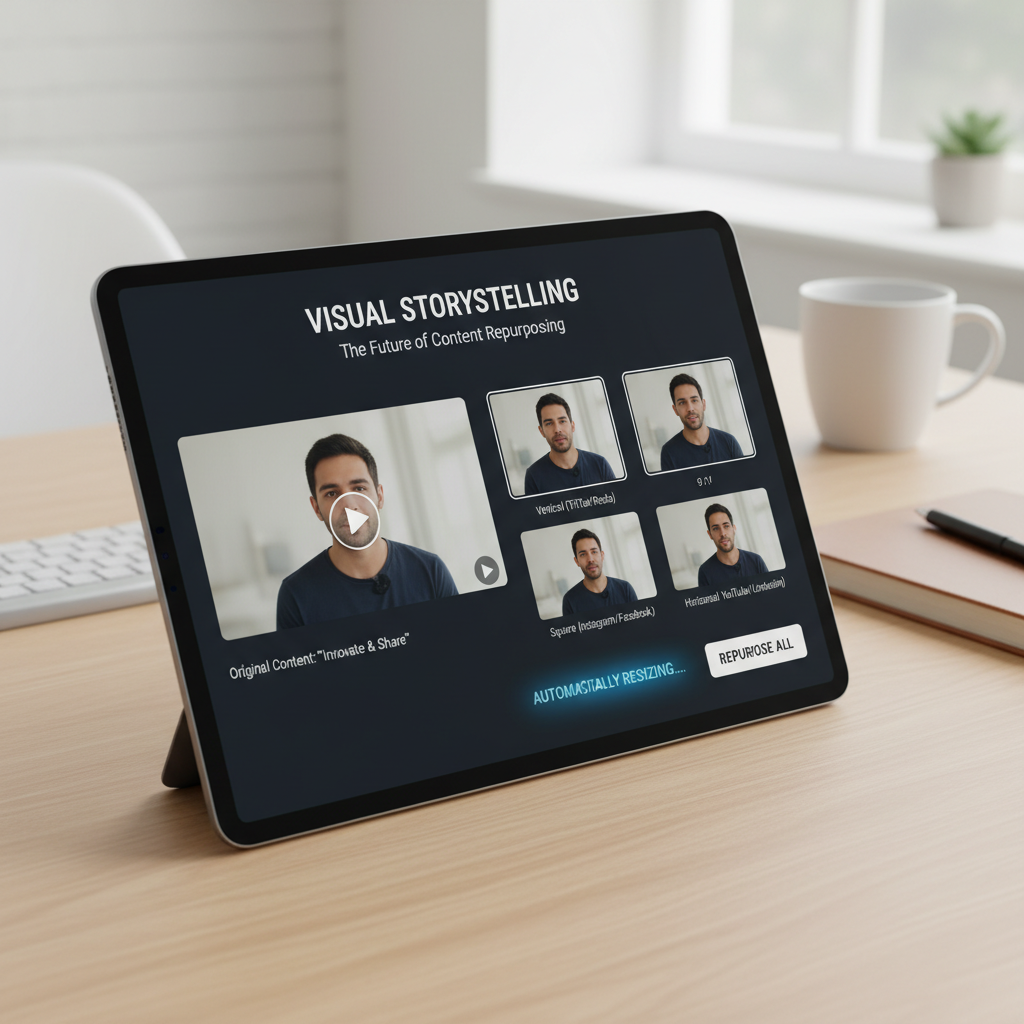
Repostra app automated resizing interface
What Are the Solutions to Common Repurposing Challenges?
Many teams face roadblocks when trying to scale their visual content. Practical solutions exist for these specific pain points.
Lacking Design Skills
Modern tools democratize visual creation. You don't need to be a professional designer. Intuitive interfaces, AI assistance, and smart templates bridge the skill gap. Focus entirely on your message. Let the software handle the technical design execution.
Maintaining Cross-Platform Consistency
Use a centralized brand kit and asset library. Automated consistency tools force every new piece of content to follow your brand rules. You can adapt the format for different platforms while staying strictly within your established brand guardrails.
Finding the Time to Create
Repurposing is vastly faster than creating from scratch. Adopt batch creation workflows. Apply the 80/20 principle. A tiny amount of creation time yields a massive distribution impact.
Staying Authentic While Using Automation
Treat AI as an assistant. Inject human moments by showing real faces, voices, and messy workspaces. The ambient realism approach scales perfectly because it doesn't require a polished studio setup.
FAQ
How much time does content repurposing actually save?
Teams using visual content repurposing tools report producing 34% more content with the same resources. A single pillar asset like a webinar can generate 10 to 15 platform-specific visual pieces in a fraction of the time it would take to create each from scratch. This typically reduces creation time by 60-70% while extending content reach significantly.
What is the difference between repurposing and just reposting the same content?
Repurposing transforms the core message into platform-native formats that respect each channel's unique context, audience behavior, and visual requirements. Reposting copies identical content everywhere, ignoring platform differences. Effective repurposing adapts a webinar into vertical TikTok clips, LinkedIn infographics, and email visual summaries so the message fits the medium perfectly.
Do I need expensive design software to create visual content at scale?
No. Modern platforms like Repostra.app provide intuitive visual creation tools with templates, automated resizing, and brand consistency features. These tools eliminate the need for advanced design skills or expensive software. The current shift favors strategic direction over technical execution.
How do you maintain brand authenticity when repurposing content across multiple platforms?
Establish a visual narrative system with consistent color palettes, typography, imagery style, and voice. Then adapt the format and framing to each platform while maintaining those core brand elements. Tools with brand kit features ensure every repurposed asset carries your visual DNA.
What types of content work best for visual repurposing?
High-value pillar content with rich insights works best. Webinars, research reports, case studies, long-form articles, podcast episodes, and expert interviews are ideal. These assets contain multiple sub-stories, data points, and quotable moments that easily extract into infographics, quote graphics, short videos, and interactive carousels.
The Visual-First Future Starts Now
The shift is permanent. Text gets skimmed, but visuals get remembered. That massive 65% versus 10% retention gap dictates exactly how you should communicate. The 94% ROI improvement from repurposing (Content Marketing Institute, 2026) makes this a business imperative.
Visual storytelling combined with strategic repurposing creates a massive competitive advantage in 2026. Audit your existing high-value content immediately. Identify the best repurposing opportunities hiding in your archives. Establish your visual narrative system today. Platforms like Repostra.app stand ready as your partner to execute this exact vision with maximum efficiency.