The Role of AI in Emotional Branding through Content
Understand how AI can help create emotionally resonant content that strengthens your brand identity.

AI in Emotional Branding: How to Scale Without Losing Your Human Touch
TL;DR: AI in emotional branding uses sentiment analysis and predictive positioning to help businesses create content that genuinely resonates with audiences. The winning strategy treats artificial intelligence as a support tool for data-driven insights while keeping humans at the center of storytelling. This approach lets brands scale their digital presence without sacrificing the authentic connections that build customer loyalty.
Key Takeaways
- AI sentiment analysis helps predict the right tone for specific audience moments and emotional contexts
- Authentic scaling requires humans for storytelling and values alignment while algorithms handle distribution and timing
- Predictive positioning can boost content engagement by up to 43 percent when combined with human creativity
- 93.4 percent of U.S. consumers prefer human interaction over automated brand responses
Imagine staring at a social media analytics dashboard showing massive reach but zero meaningful comments. You hit publish on three posts today and received absolute silence in return.
This is the modern marketing paradox. More automated content generation often equals less emotional connection.
The challenge is scaling production without becoming just another robotic brand. The digital landscape is flooded with synthetic text. Consumers have developed a hypersensitivity to robotic messaging.
This creates an emotional gap between brands and their audiences. Artificial intelligence enters this space not as a replacement for humanity but as its amplifier.
What Is AI in Emotional Branding?
AI in emotional branding combines machine learning and sentiment analysis to trigger specific emotional responses aligned with your brand identity. We're moving from a static brand identity of fixed logos to intelligent adaptability.
The process breaks down into three distinct components. Sentiment analysis understands how your audience feels right now. Predictive positioning knows when a specific message will resonate best. Contextual adaptation adjusts your tone without losing your core voice.

Visual representation of the balance between data analytics and human emotion
Consider a brand sharing the exact same core message across platforms. Artificial intelligence insights help adjust the language for LinkedIn using a professional tone. It then shifts the wording for Instagram to be highly conversational. The AI analyzes the behavioral patterns while the human provides the soul.
Why Does Emotional Branding Matter More Than Ever in 2026?
Digital spaces are flooded with automated content. This saturation creates an authenticity backlash where consumers crave genuine human connection. Empathy-driven storytelling is now the primary competitive advantage for any business.
Emotional connection equals customer loyalty. Brands that maintain human-centric approaches stand out immediately. People want to know a real person is behind the screen.
Statistics back up this shift in consumer behavior. According to MarTech (2026), 93.4 percent of U.S. consumers prefer interacting with a human over AI. Research from OutreachX (2026) shows that 55 percent of all people are more likely to trust brands that prioritize human-generated content. That number jumps to 66 percent for Gen Z and Millennials.
"Artificial intelligence will make marketers more efficient, but it is human emotion, empathy, and creativity that will make brands memorable." - Paul Roetzer, CEO of the Marketing AI Institute
How Does AI Create Emotionally Resonant Content?
Personalization has moved beyond simple demographics like age and location. It now focuses entirely on emotional context. Intelligent curation replaces the outdated content factory approach.
Step 1: Use data-driven empathy. AI analyzes interaction rhythms and behavioral cues to understand why people engage.
Step 2: Apply predictive emotional context. This moves beyond basic metrics to grasp the mood behind the engagement.
Step 3: Implement real-time adaptation. You adjust your content based on immediate cultural signals and platform context.
Step 4: Track sentiment constantly. You look for emotional impact rather than just superficial reach.
According to Spinta Digital (2026), predictive positioning and adaptive narratives can increase engagement by up to 43 percent. The algorithm suggests the timing and tone while the human decides the final message.
What Does the Human and AI Creative Partnership Look Like?
There is a clear division of labor in modern marketing. You must treat technology as a support system rather than a substitute. Over-automation destroys your brand soul.
Humanity at scale is the winning framework. You use tools to handle the heavy lifting of data analysis. You reserve human energy for values alignment and authentic storytelling.
| Task Category | AI Responsibility | Human Responsibility |
| :--- | :--- | :--- |
| Strategy | Pattern recognition | Values alignment |
| Creation | Tone optimization | Emotional framing |
| Execution | Predictive timing | Authentic storytelling |
The backlash against overly polished content is real. Human-led marketing wins because it embraces imperfection and genuine perspective. You maintain your authentic scaling by knowing exactly when to let humans lead.
How Can Social Media Managers Apply This Practically?
You need actionable ways to blend these tools into your daily workflow. The strategic pillars are intelligent curation, authentic scaling, and predictive connection. Tools like Repostra help you maintain a human pace in a high-speed digital world.
Intelligent Re-contextualization: You can adapt shared content to fit your specific brand voice. This is vital when curating industry news. You keep the original intent but add your unique perspective.
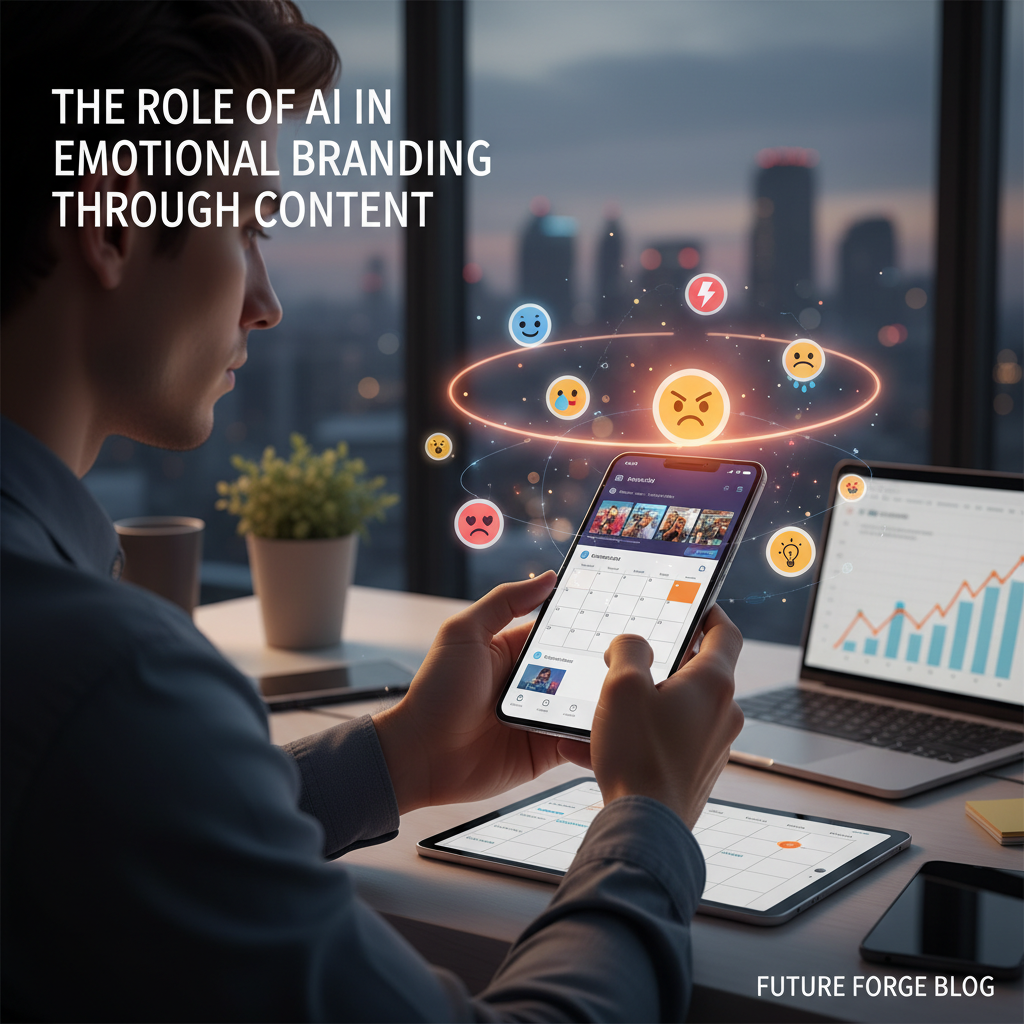
Social media manager optimizing content timing based on emotional analytics
Timing Optimization: Algorithms suggest when to post based on audience emotional states. You might share educational content in the morning when people are focused. You then share inspirational content in the evening when people are relaxing.
Sentiment-Driven Analytics: You must look beyond standard clicks. Focus on emotional engagement metrics like the depth of comments and content save rates.
How Can You Avoid the Robotic Brand Trap?
Relying entirely on automated copy without human review leads directly to a loss of distinct brand voice. You'll notice your engagement metrics dropping despite a high output of posts.
Your content will start to feel generic and templated. You can fix this by instituting regular voice audits. Establish strict human review checkpoints before anything goes live.
Create community feedback loops to measure how your audience feels about your messaging. Ask yourself if a post sounds like something your founder would actually say. If the answer is no, you need to rewrite it. Empathy-driven storytelling requires a human touch.
What Does the Future of AI in Emotional Branding Look Like?
Hyper-personalization is becoming the standard across all industries. Real-time sentiment adaptation will integrate across every customer touchpoint. Brands will function as intelligent adaptors.
Capabilities will certainly grow over the next few years. However, the human need for authenticity will intensify at the exact same rate. You'll see the evolution of living brand experiences that shift naturally with cultural moods.
You don't need to choose between efficiency and authenticity. You can audit your current content for emotional resonance today. Identify where analytics can support your scheduling and curation. Keep your human voice central to everything you build.
FAQ
Can AI really understand human emotions well enough for branding?
Algorithms don't feel emotions, but they excel at pattern recognition. They analyze millions of data points like engagement times and sentiment signals to predict what content triggers specific responses. The technology identifies the patterns while humans provide the authentic storytelling that creates genuine connection.
Will using AI for content make my brand seem less authentic?
Only if you let algorithms replace human judgment entirely. Brands lose authenticity when they generate everything from headlines to full posts without oversight. The winning approach uses data-driven insights for timing and tone while keeping humans in charge of voice and values expression.
How much does AI emotional branding technology cost for small businesses?
Costs vary widely from free basic tools to enterprise solutions. Many social media management platforms starting at $15 to $50 per month now include sentiment analysis and optimal timing features. You don't need expensive custom software to start intelligent curation and scheduling.
What's the difference between AI personalization and AI emotional branding?
Personalization uses data like names and past purchases to customize content for specific locations or demographics. Emotional branding goes much deeper by analyzing why someone engages and their current sentiment patterns. It crafts content tailored to how a person feels and what they need right now.
What metrics should I track to measure emotional engagement?
Look entirely beyond vanity metrics like basic shares. Focus on comment sentiment ratios, conversation depth, and save rates that show content was valuable enough to revisit. A post with 100 engaged comments heavily outperforms one with 1,000 passive likes for long-term brand building.