The Best Content Repurposing Strategy for Small B2B Teams
Outline a realistic repurposing system for lean teams that need more output without adding complexity. Focus on prioritizing high-value assets, simple workflows, and sustainable publishing habits.

The Best Content Repurposing Strategy for Small B2B Teams in 2026
Small B2B marketing teams face an impossible challenge: publish everywhere with almost no resources. The solution isn't working harder. It's working smarter with a content repurposing strategy built around the pillar method. Create one high-value anchor asset, then systematically extract multiple derivative pieces across your marketing channels. A structured workflow lets lean teams maintain consistent output without burning out. AI tools handle transcription and formatting while humans preserve brand voice and strategy. This system turns operational efficiency into your competitive edge.
Key Takeaways
- Create one pillar content asset per cycle and extract eight to twelve derivative pieces from it.
- Use a structured four-phase workflow to eliminate last-minute marketing chaos.
- Deploy AI for transcription and formatting while humans maintain strategic oversight and quality control.
- Drip-distribute repurposed content over several weeks to maximize reach and drive traffic back to your hub.
- Optimize all content for both traditional search engines and AI discovery platforms like ChatGPT and Perplexy.
Picture a marketing manager staring at an empty content calendar. Zero bandwidth. A mandate to publish everywhere. Budget cuts. No new headcount. This is the reality of B2B marketing in 2026.
Telling small teams to "do more with less" sounds insulting. But the math is simple: you cannot survive by writing every social post or blog article from scratch.
This requires a shift from a quantity mindset to a systems mindset. You need a reliable content repurposing strategy. One that turns a single great asset into weeks of multi-channel material. It's not about cutting corners. It's about strategic multiplication.
Traditional creation models no longer work for lean organizations. Single-use pieces take too much time and yield too little return. Small marketing departments need a predictable method to show up consistently on LinkedIn, in email newsletters, and on video platforms.

B2B marketer looking at an empty calendar
Why Do Small B2B Teams Need a Content Repurposing Strategy?
According to the Content Marketing Institute's 2025 B2B Benchmarks report, 63% of small teams cite lack of time and resources as their top content marketing challenge. Budget pressures are intensifying across tech and professional services sectors. Companies expect more touchpoints but refuse to expand headcount.
The average B2B buyer now consumes multiple pieces of content before engaging with sales. Creating that volume from scratch is impossible for a team of two. Single-use articles provide diminishing returns as distribution channels fragment.
"The question isn't whether to repurpose anymore. It's whether your team will survive without doing it systematically." — Ann Handley, Chief Content Officer at MarketingProfs
Why Is Efficiency an Imperative?
Budget cuts and higher output expectations create intense pressure. Lean teams are drowning in requests for case studies, social media updates, and sales enablement collateral. Creating net-new material for every single request guarantees burnout.
A systematic repurposing strategy acts as a pressure relief valve. It allows a small group to produce enterprise-level volume without working nights and weekends. You build a library of assets rather than running on a treadmill of disposable posts.
What Is the Multi-Touchpoint Reality?
Modern buyers expect to find your brand everywhere. They might discover you on LinkedIn, search for your frameworks on Perplexity, and watch your clips on YouTube. Small teams cannot afford to ignore these channels.
They also cannot afford to build unique campaigns for each one. Strategic repurposing bridges this gap by adapting one core message for multiple environments. You maintain a unified brand presence without duplicating your creative efforts.
What Is the Pillar Content Method?
The pillar method is a foundational system built around one comprehensive asset. You create a single high-value anchor piece. Then you systematically extract smaller derivative pieces from it. This replaces the old model of creating twelve separate posts from scratch.
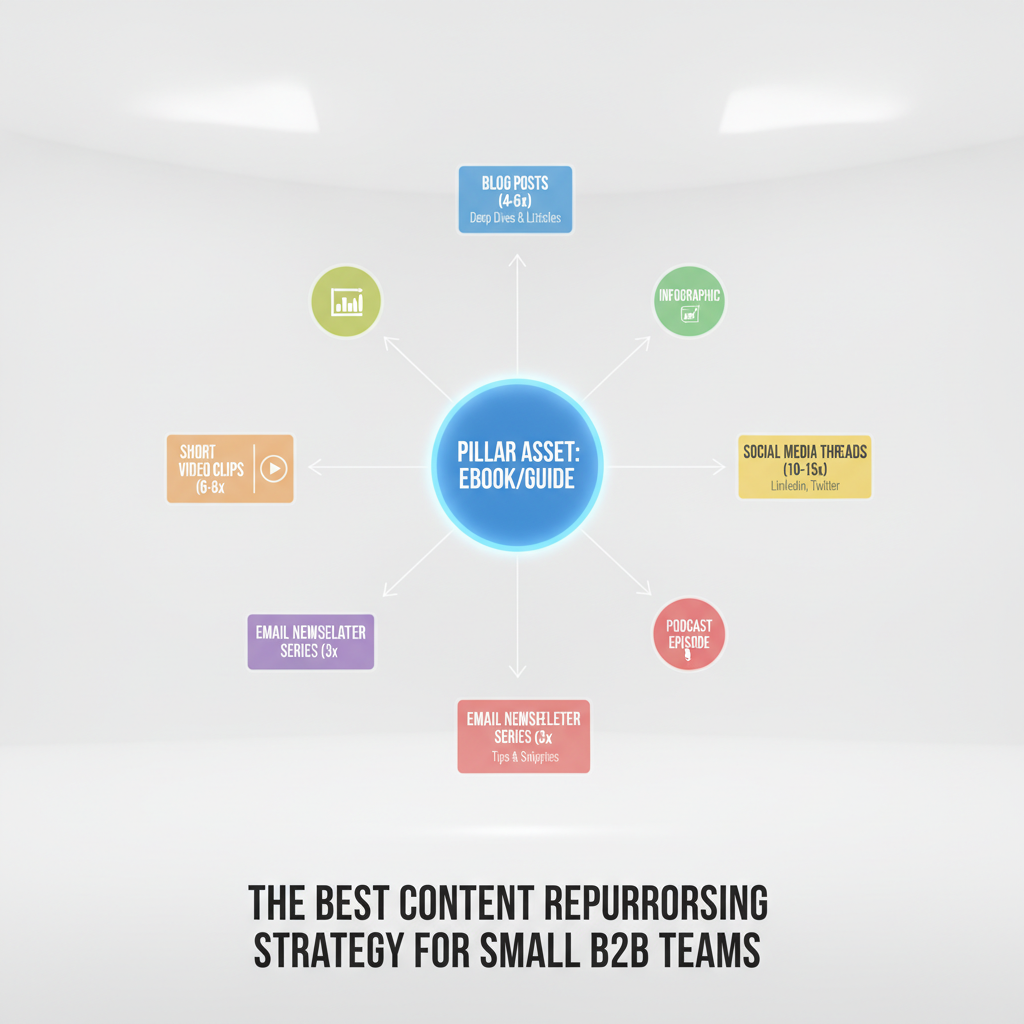
Content pillar hub and spoke strategy diagram
Common pillar formats include in-depth industry reports, webinars, original research, and comprehensive guides. These require significant effort to produce. Their depth makes them perfect for breaking apart. A typical workflow turns one anchor asset into eight to twelve derivative pieces. These might be social updates, newsletter sections, or short video clips.
The main pillar serves as a central hub. All derivative content links back to it. This builds topical authority and improves search visibility.
What Are Some Examples of High-Performing Pillar Assets?
Case study webinars: Record a 45-minute interview with a successful customer. Turn the transcript into a written case study. Extract three video clips for social media. Write an email sequence highlighting the core problem and solution.
Original industry research: Publish a comprehensive PDF report on industry trends. Create a data visualization infographic. Post a thread featuring the most surprising statistics. Draft a blog post expanding on a specific data point.
Comprehensive guides: Write a definitive 5,000-word operational guide. Break it into a five-part automated email course. Turn key frameworks into visual carousels for LinkedIn and other social platforms.
The Four-Phase Content Repurposing Workflow for Lean Teams
A structured workflow replaces chaos with predictability. This specific system is designed for teams of one to three marketers. It ensures sustainable output and stops the cycle of last-minute brainstorming.
| Phase | Focus | Actionable Steps for Small Teams |
| :--- | :--- | :--- |
| Ideation | Strategic Planning | Plan the pillar content and its derivatives before creation. |
| Extraction | Identifying Nuggets | Scan the pillar content for striking stats and clear frameworks. |
| Transformation | Format Adaptation | Adapt these nuggets into formats native to each channel. |
| Scheduling | Drip Distribution | Distribute content over weeks to drive traffic back to the hub. |
How Do You Plan Ideation Before Creation?
Core principle: Know your derivatives before you create the main pillar. Planning ahead prevents you from creating a report that's impossible to break down.
Identify one core buyer problem to solve this month. Map out the main asset and up to ten planned derivatives upfront. Assign each smaller piece to specific platforms. Schedule the creation and distribution timeline before you write a single word.
Pro tip: Use a simple spreadsheet template. Include columns for the pillar asset, derivative format, chosen channel, and publish date.
How Do You Extract and Mine Golden Nuggets?
Core principle: Every comprehensive resource contains five to ten high-value nuggets worth amplifying. You don't need to summarize the entire piece every time.
Review your source material with an extraction lens. Look for striking statistics or unique data points. Find counterintuitive insights or controversial industry opinions. Highlight clear frameworks and step-by-step processes.
Tag eight to ten standalone moments. Note which items work best for visual graphics versus text or audio. A complex data point might need an infographic. A strong quote might just need a text post.

Extracting golden nuggets from pillar content
How Should You Transform and Adapt to Native Formats?
Core principle: Avoid copying and pasting exact text. You must adapt your messaging to each platform's native language.
According to research from the LinkedIn B2B Institute (2023), platform-native content generates significantly more engagement than generic repurposed posts. AI tools are highly effective here. Use them for transcription, summarization, and first-draft formatting.
A human must then edit for brand voice and strategic angle. Take a technical webinar as an example. You can adapt it into a visual framework carousel for social feeds. You can summarize the main takeaway for an email newsletter. You can cut a two-minute highlight reel for YouTube.
Why Should You Schedule and Drip Rather Than Dump?
Core principle: Distribute derivatives over time to maximize reach and drive traffic back to your main asset.
Publish your anchor piece first. Release the smaller derivatives over four to eight weeks. Every smaller post should link back to the main hub. This creates multiple discovery moments for different audience segments.
A recommended cadence is two to three derivative pieces per week. Use scheduling platforms to automate this drip distribution. This keeps your brand visible even when your team is busy working on next month's project.
How Should Small Teams Use AI in Their Strategy?
Automation is the baseline standard for marketing teams in 2026. It's not a replacement for human strategy. The best approach is a co-pilot model. Machines handle volume and formatting. Humans handle value and nuance.
According to Gartner's 2023 Marketing Technology Survey, teams using AI-assisted content workflows report significant time savings while maintaining quality standards. Finding the right balance is crucial for lean departments.
What Specific Tasks Should AI Handle?
Transcription and summarization: Feed your video and audio files to a tool to generate accurate text transcripts. Ask it to extract the top five key points.
First draft formatting: Prompt an AI assistant to turn a blog paragraph into a social media thread.
Headline variations: Generate twenty alternate headlines for testing in your email campaigns.
Distribution automation: Use software to schedule and post your approved assets across various networks.
What Strategic Elements Must Humans Own?
Strategic planning: An algorithm doesn't know which topics your target accounts care about right now. Humans must select the pillar topic.
Brand voice refinement: AI drafts often sound generic. A human editor must inject personality and tone.
Fact checking and quality control: Always verify claims. AI systems can hallucinate data or misinterpret complex technical concepts.
Relationship context: Humans understand the nuance of customer stories. They know how to handle controversial industry topics with tact and empathy.

AI and human collaboration in content marketing
How Do You Optimize Repurposed Content for Generative Discovery?
Content discovery has shifted rapidly. Buyers now find answers via ChatGPT, Perplexity, and Google's AI Overviews. Traditional SEO is no longer enough. You must optimize your content repurposing strategy for what's being called Generative Engine Optimization (GEO).
These systems prioritize clear structure. They look for definitive answers and authoritative sources. You need to format your resources so these engines can easily parse and retrieve your insights.
What Are the Structural Best Practices?
Clear hierarchy: Use descriptive headings in all long-form derivatives. Write question-based headers that match what buyers actually ask.
Executive summaries: Include brief summaries at the top of key sections. AI engines often pull these directly to answer user queries.
Standalone answers: Add FAQs at the bottom of major articles. Structure your answers to stand alone. Assume the search engine will pull the answer without any surrounding context.
Why Does Format Diversity Matter?
Text alone limits your reach. Generative engines increasingly index video transcripts and audio files. They pull quotes directly from podcast clips.
The highest ROI for text-heavy teams is transforming top posts into multimedia. Record a video version of your best-performing article. Host an audio breakdown. A multi-format presence creates significantly more discovery opportunities.
What Makes a Sustainable Content Repurposing System?
A system is only sustainable if it runs with your current team. You can't design a workflow for a fantasy future team of ten. You have to build it for the two people you have today.
Warning signs of an unsustainable setup include constantly missed deadlines and declining output quality. Team burnout is the ultimate indicator of a broken process. The goal is doing less but better. One great pillar monthly beats four mediocre posts published weekly.
How Do You Set a Realistic Pillar Frequency?
Small teams of one to two people: Aim for one pillar per month plus its associated derivatives.
Medium teams of three to five people: Attempt two pillars per month plus derivatives.
Buffer time: Always build in extra days for unexpected challenges. Software breaks and subject matter experts miss interview deadlines.
How Can You Automate the Repetitive Tasks?
Use templates: Create standard templates for recurring formats. You shouldn't be redesigning your newsletter banner every week.
Create standard operating procedures: Document your workflow. Write down the exact steps for your ideation and extraction phases.
Invest in setup: Spend time building your system upfront. A few hours organizing your spreadsheet will save hundreds of hours in execution.
How Do You Avoid Common Content Repurposing Mistakes?
Even the best strategies fail when execution falters. Avoid these frequent missteps to keep your marketing engine running smoothly.
How Do You Avoid the Copy-Paste Syndrome?
Problem: Sharing identical content across all platforms. A long text block looks great in an article but fails completely on visual platforms.
Solution: Transform messages for native formats. Adapt the presentation while keeping the core message intact. Rewrite a heavy paragraph into a punchy bulleted list for social media.
How Do You Fix the Missing Link Problem?
Problem: Your smaller derivative posts get engagement, but they fail to drive traffic to the main asset.
Solution: Every piece must include a clear call to action. Direct readers back to the original hub. Tell them exactly what value they'll get by clicking through.
Why Is Strategic Prioritization Necessary?
Problem: Repurposing low-value updates wastes time. Breaking down a generic company announcement yields zero return.
Solution: Only create main pillars on topics that solve real buyer problems. Focus on building trust through real customer experiences and distinct expertise.
How Do You Avoid Overwhelming Your Audience?
Problem: Publishing all ten derivatives on the exact same day.
Solution: Drip your distribution over several weeks. Let different segments of your audience discover the insights at their own pace.
FAQ
How Many Pieces of Content Can You Create From a Single Pillar Asset?
Most small teams can realistically extract eight to twelve high-quality derivative pieces from one comprehensive pillar asset. For example, a 45-minute webinar can become a full transcript blog post, three visual carousels highlighting key frameworks, five short video clips, a three-part email newsletter series, two social media threads, and one infographic. The exact number depends on your pillar's depth and your capacity. Quality always trumps quantity.
What Is the Minimum Team Size Needed for This Strategy?
Content repurposing actually works best for the smallest teams. A single marketer can successfully run this system. They just need to create one main asset monthly and systematically extract derivatives. They can use AI tools for heavy lifting like transcription and formatting while maintaining strategic oversight. The four-phase workflow was specifically designed for lean teams of one to three people who need consistent output without adding headcount.
How Long Should You Wait Between Publishing Derivative Assets?
Publish your main piece first. Then drip-release derivatives over four to eight weeks. A practical cadence is two to three derivative pieces per week. This approach maximizes reach since different audience segments discover you at different times. It builds sustained momentum and creates multiple opportunities to drive traffic back to your authoritative hub. Avoid publishing everything in one week to prevent overwhelming your audience and missing the compounding discovery effect.
Can This Work for Highly Technical Industries?
Absolutely. Technical industries often benefit most from repurposing because creating deep expertise content is incredibly resource-intensive. A detailed technical whitepaper becomes even more valuable when you extract educational snippets, framework summaries, and problem-solution highlights for different channels. The key is maintaining technical accuracy during transformation. Human expert oversight is non-negotiable here. Your anchor establishes thought leadership while derivatives meet buyers across their research journey.
What Tools Do You Need to Start This System?
Start with minimal software. You need a transcription tool for video or audio. You need a project management system to track your workflow, even if it's just a spreadsheet. You need a scheduling platform for drip distribution. Finally, you need basic editing tools native to your creation process. Many teams over-invest in tools before establishing their workflow. Get your system running manually first. Add automation only where friction genuinely exists.
Content repurposing is not a shortcut for lazy marketers. It's a strategic multiplication method. By following the four phases of ideation, extraction, transformation, and scheduling, lean departments can achieve massive reach. This system works because it relies on real team constraints rather than fantasy budgets.
Your content strategy sets the foundation for growth in 2026. As generative engines continue evolving, your human strategic layer becomes even more valuable. Start small this week. Pick one upcoming whitepaper or webinar and plan five derivatives.
For teams ready to systematize this exact workflow, tools like Repostra.app bridge the gap between an idea and its multi-channel execution. It serves as a centralized system that replaces manual fragmentation. Repostra.app empowers your human layer, helping you maintain your unique brand voice while maximizing your return on investment. Build your system today and turn your best ideas into a predictable growth engine.