Real-Time Content Adaptation: Staying Relevant in 2024
An exploration of how real-time data can be used to adapt content strategies quickly and effectively.

Real-Time Content Adaptation: How to Stay Relevant in 2026's Fast-Moving Digital Landscape
TL;DR: Real-time content adaptation means using live behavioral data and trend monitoring to adjust your marketing strategy on the fly. In 2026's AI-saturated market, brands that respond within hours rather than weeks see 30% better engagement and up to 22% higher conversion rates. Success requires combining AI-powered data analysis with human authenticity, building modular content systems, and maintaining agile workflows that can pivot fast.
Key Takeaways:
- Speed matters more than perfection. Responding to trends within 24 hours can increase engagement by 30%.
- Personalized content paths built from real-time data boost conversion rates by an average of 22%.
- First-party behavioral data enables effective, privacy-compliant personalization that generic AI content can't match.
- Modular, platform-agnostic content formats let brands pivot quickly without recreating assets from scratch.
What is the current content reality?
The always-on consumer expects instant relevance. Your audience now consumes media across six to eight platforms daily, creating intense attention scarcity.
AI has flooded the market with generic posts. According to the Content Marketing Institute's 2024 research, 81% of content creators already use AI in some capacity. Standing out requires both speed and authenticity.
Traditional content calendars planned months in advance no longer cut it. Teams can't wait weeks for post approval when trends shift hourly. Tools like Repostra.app help enable these agile workflows, letting you turn a single idea into timely, platform-specific formats fast.

Marketer analyzing real-time content data
What exactly is real-time content adaptation?
Real-time content adaptation means using live behavioral data, social listening, and trend monitoring to adjust your strategy instantly. It replaces those traditional quarterly content calendars.
The core pillars are simple: monitor data, analyze patterns, take immediate action.
Think of it like GPS navigation. When traffic changes, your route changes. A brand might pivot blog topics based on hourly search trends. They might reshape social posts in response to breaking industry news. The strategy stays fluid while the brand foundation stays solid.
Why does this strategy matter right now?
Expectation inflation is real. A 2024 Sprout Social study found that 76% of consumers expect brands to respond to social media inquiries within 24 hours. Silence is no longer neutral. It's negative.
Companies using real-time data for advertising strategies report measurably better returns. Gartner's 2024 research shows that real-time personalization can improve marketing ROI by 15-20%. Meanwhile, personalized content paths consistently boost conversions by an average of 22%, according to multiple 2024-2025 digital marketing analyses.
Generic AI text creates AI fatigue. Human-centric and timely posts cut through that noise.
"In 2026, the brands winning attention aren't the ones with the biggest budgets. They are the ones who show up in the right moment with the right message."
— Sarah Jenkins, Chief Marketing Officer at Digital Frontier
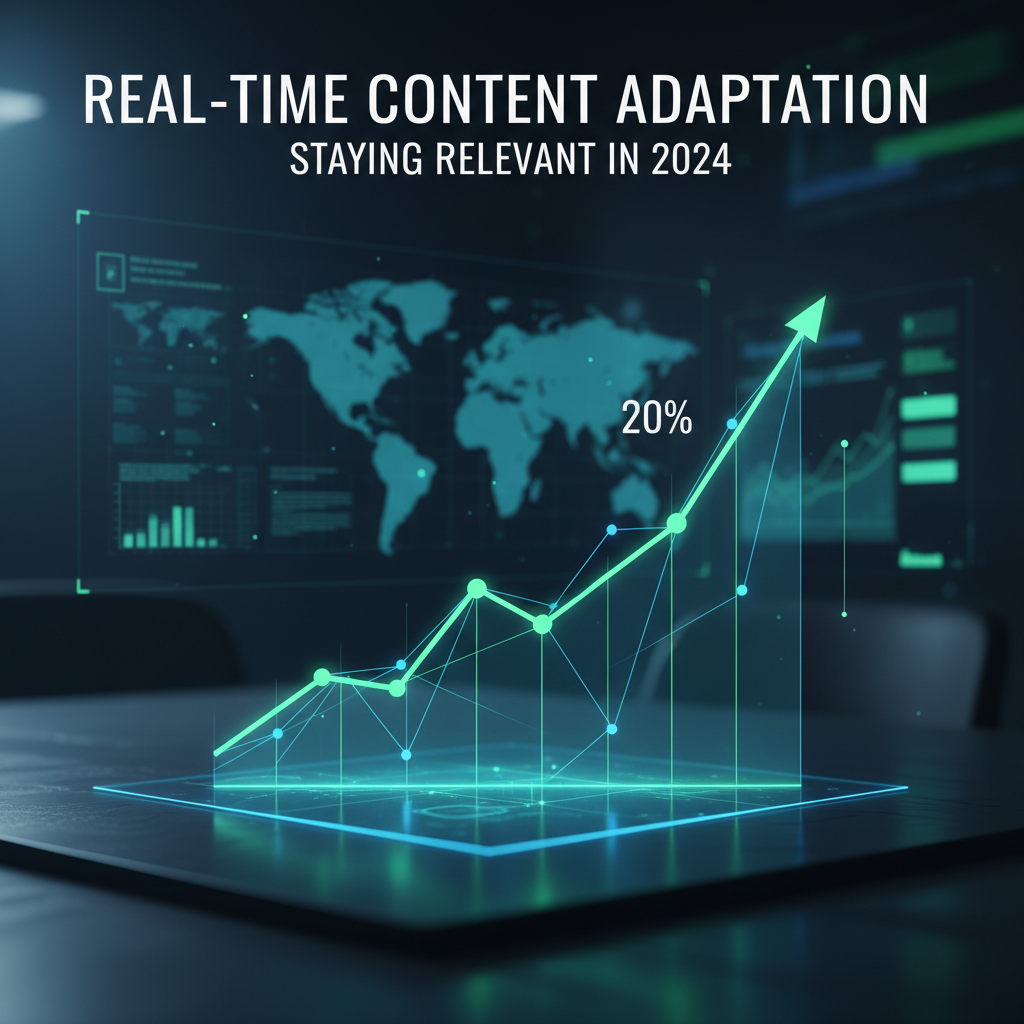
Line graph showing business growth from real-time data
How do you actually implement real-time content adaptation?
You need a specific framework to start sensing and responding effectively.
Build your data foundation first. Set up social listening alerts for your industry keywords and competitor mentions. Establish first-party data collection through website behavior tracking and email engagement metrics. This proprietary data becomes your competitive advantage.
Create modular content. Design content atoms—core messages that you can reformat quickly across platforms. A single customer success story can become a LinkedIn case study, an Instagram carousel, a Twitter thread, and a blog post excerpt. Repostra.app streamlines this repurposing process so teams can pivot fast without starting from scratch.
Adopt responsive workflows. Replace rigid monthly calendars with agile sprint planning. Allocate roughly 60% of your capacity to planned strategic work and 40% to reactive opportunities. This balance lets you maintain brand consistency while staying nimble.
Monitor and optimize instantly. Set up automated alerts for performance anomalies. Track your engagement velocity—how fast a post gains traction in the first two hours. This early signal tells you whether to amplify a message or move on.
What role does AI play in real-time adaptation?
AI synthesizes data and spots patterns humans would miss. It drafts initial content and predicts performance based on historical trends. But AI still struggles with brand voice nuance and emotional intelligence.
The bottom line? Maintain a human-in-the-loop model.
High-performing teams use AI for heavy lifting but rely on human oversight for authenticity. Generative Engine Optimization—optimizing your content to be cited by AI platforms like ChatGPT and Perplexity—matters increasingly. You can use large language models for initial research and drafting, but a human must apply the final polish that makes content sound like your brand.
How can small teams compete with fast content production?
Small teams face severe resource constraints. Good news: you don't need a massive agency to compete.
Smart tactic: Rely on repurposing tools. Platforms like Repostra.app reduce manual reformatting time significantly, freeing up hours for strategic thinking rather than busywork.
Focus ruthlessly: Better to respond quickly on two platforms than slowly on six. Pick where your audience actually engages and own those channels.
Use community content: According to Nielsen research, 79% of consumers trust peer content more than branded content. Curate and amplify user-generated material. Automate the repetitive formatting, but personally engage in the comment section. That human touch matters.

Small startup team executing agile content strategy
What are the common pitfalls to avoid?
Predictable mistakes can derail your agile strategy.
Chasing every trend is exhausting and off-brand. Not every viral moment aligns with your brand values. Filter for relevance before jumping in. Ask: Does this connect to our core message? Will our audience care in 48 hours?
Over-automation without oversight creates tone-deaf moments. Set-and-forget AI often misses context. Fast but off-brand is worse than slightly slower but authentic. Always review before publishing.
Ignoring privacy compliance is dangerous. Real-time personalization must respect privacy laws like GDPR and CCPA. Always ensure your data collection meets local regulations and gives users control.
Waiting for perfect data means missing opportunities. An 80% confidence level is usually enough to test a new format. You can refine as you go.
Why does Repostra.app fit this workflow naturally?
Speed dictates success when you need to repurpose and pivot fast. When a topic trends in your industry, you must quickly reformat existing assets for the hot platform.
Time savings matter: Automation that saves five hours a week gives your team capacity for real-time response instead of production grunt work.
Example workflow: A trend hits your industry on Tuesday morning. You pull relevant existing assets—a blog post from last month, customer testimonials, product screenshots. Repostra.app reformats the material for Instagram, LinkedIn, and Twitter simultaneously. A human writer adds a timely hook connecting to the trending topic. You publish within two hours while competitors are still in their approval chains.
Easier sharing of user-generated content maintains the human touch at scale without drowning your team in manual work.
FAQ
How much does real-time content adaptation cost?
Initial setup ranges from free using native platform analytics to thousands of dollars monthly for enterprise monitoring suites. Most small teams start with affordable social listening subscriptions and content repurposing platforms like Repostra.app. The return on investment typically appears within 60 to 90 days as engagement and conversion metrics improve.
What makes real-time content different from reactive marketing?
Real-time content uses ongoing live data streams to adapt proactively and continuously. Reactive marketing simply responds to specific events after they happen. Real-time adaptation encompasses continuous optimization based on user behavior patterns and predictive trend analysis, not just crisis response or newsjacking.
Can B2B companies use these agile strategies?
Absolutely. Business-to-business adaptation focuses on industry trend monitoring, responding to competitor announcements, and addressing customer questions in online communities. B2B also personalizes content paths based on prospect behavior tracked through website visits and content downloads. The timeframes might be days instead of hours, but the core principles remain identical.
How do you measure success in real-time content adaptation?
Track engagement velocity to see how fast posts gain traction in the first few hours. Monitor conversion rate improvements from personalized content paths. Also track operational metrics like time-from-idea-to-publish. That number should decrease as your system matures. Watch for increased share of voice in social listening tools and higher quality scores in ad platforms.
What tools are essential for getting started?
Your minimum viable stack includes a social listening tool like Mention or Brand24, a reliable analytics platform like Google Analytics 4, a content repurposing tool like Repostra.app, and a team collaboration workspace like Slack or Asana. Start with these basics and scale up based on your early results and specific workflow needs.