Personalizing Content for Better Audience Connection
Understand the benefits and methods of tailoring content to meet audience preferences.

Why Personalizing Content Turns Crickets Into Conversations
You hit 'post' on another carefully crafted piece of content, and crickets. Sound familiar? It happens to the best brands. We spend hours designing the perfect graphic or editing a slick video. We release it into the wild and wait for the likes to roll in. When the engagement flatlines, we blame the algorithm. But the real issue is usually much simpler. We're posting at our audiences instead of connecting with them.
Personalizing content is the bridge between a skipped post and a meaningful interaction. Today, 71% of consumers expect personalized interactions from the brands they follow. When content feels generic, 76% of people actually feel frustrated. They swipe away. They unfollow. They forget you exist.
This isn't about installing complicated technology or hiring a massive data team. It's about understanding what your audience actually wants to see in their feed. Audience connection relies entirely on relevance. Let's look at how tailoring your strategy turns casual scrollers into a dedicated, thriving community.

Person looking at phone with no notifications
Why Personalizing Content Is No Longer Optional
Content used to be a pure numbers game. You published as much as possible and hoped something stuck. That strategy is dead today. Audiences are overwhelmed by digital noise. They filter out generic messaging ruthlessly.
Companies prioritizing personalization generate 40% more revenue than those that don't. Think about that for a moment. Almost half your potential growth hinges on speaking directly to your audience's specific needs. Tailored content boosts conversion rates by up to 202%. Whether you run a B2B software firm or a local coffee shop, you must adapt. Brands that refuse to personalize risk becoming invisible.
The trend driving this shift is humanization. People crave authenticity over polish. They want to see the messy, real side of your business. They want to know you understand their specific daily struggles.
Consider two different fitness coaches. Coach A blasts a daily graphic that says "Workout hard today!" to everyone on their follower list. Coach B segments their audience. They share a quick video of a busy parent fitting in a short home workout for their beginner segment. For their advanced athletes, they post a detailed breakdown of complex lifting mechanics. Coach B wins every time. They understand that different people follow them for very different reasons.
The Modern Personalization Landscape
The digital landscape shifts quickly. Strategies that worked three years ago now look lazy. Here's how modern content consumption actually works.
From Basic Greetings to True Relevance
We moved way beyond basic mail-merge tactics. Slapping a first name on an email or a direct message is no longer impressive. True personalization is the new standard.
Creators use smart tools to adapt video hooks based on viewer demographics. They use dynamic caption generation to speak the exact language of specific audience segments. A single piece of content might have customized hashtag sets targeting tiny, passionate micro-communities. The goal is making the viewer feel like the content was created exclusively for them.
Short Video Meets Authentic Storytelling
Short video still dominates reach. Platforms push these quick clips to new audiences constantly. But massive reach doesn't always equal deep trust.
The modern approach is the barbell strategy. You use highly engaging short videos to capture attention widely. Then you use long-form content, like newsletters or podcasts, to build deep trust.
Founder-led content consistently outperforms polished corporate messaging. Audiences want to know the people behind the logo. They want to hear the founder talk about mistakes, challenges, and lessons learned. Authenticity beats aesthetics every single time. You don't need a massive studio setup. You just need a camera and a genuine story.
Social Platforms as Search Engines
Are social platforms the new search engines? Absolutely. Users search for specific solutions instead of just passively scrolling their feeds. They look for detailed tutorials, honest product reviews, and expert advice.
This shifts how we write captions and structure posts. Content must answer specific user intent. You have to include relevant keywords naturally in your text. SEO principles now apply directly to social media. If your post doesn't contain the exact words your audience is searching for, they'll never find it.
The Rise of Private Communities
Public feeds are saturated. Attention spans are short. Smart brands are moving their super-fans into private spaces like WhatsApp channels and Discord servers. These gated communities foster much deeper connections.
We call this building a community moat. Competitors can't easily reach your audience when they're engaging in a private group. This allows for personalization at scale. You can create segmented channels within a Discord server for highly specific interests. It feels intimate, exclusive, and perfectly tailored.
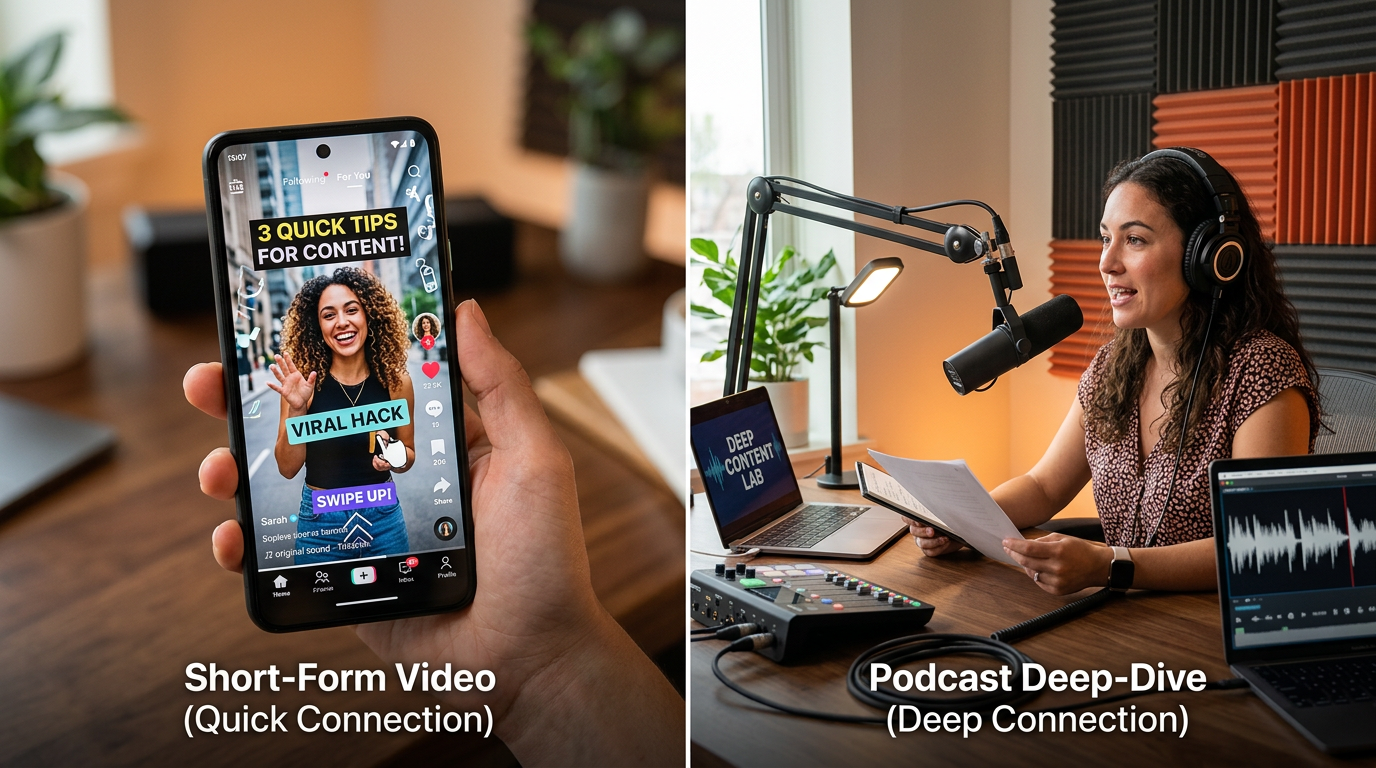
Short video and podcast microphone setup
How to Personalize Content Using Smart Strategies
You might think all this personalization requires a massive marketing team. It actually just requires better strategy and the right tools. Here's how you can personalize your output without burning out.
Segment Your Audience and Your Content
Stop posting for everyone. When you speak to everyone, you speak to no one. Break your followers down into specific groups. You might have beginners versus experts. You might serve two different industries.
Look at your native analytics to identify these groups. See which posts get saved and shared most often. Once you know who's watching, create dedicated content calendars for each segment. Dedicate Mondays to beginner tips and Wednesdays to advanced industry news. This creates a reliable, personalized rhythm for your different audience types.
Curate With Intent Not Just Volume
You don't have to create every single post from scratch. Curation is a powerful way to provide value. But you must curate with serious intent.
Do a pattern analysis of your audience. Which content types do they engage with? Which creators do they already trust? This is where tools like Repostra become invaluable. You can find aligned content efficiently without doom-scrolling for hours.
Don't just share something to fill a blank slot on your calendar. Quality curation always beats a high quantity of generic posts. Share pieces that directly address your segments' specific pain points.
Add Your Unique Voice to Every Post
Reposting without context feels cold. It looks like you're just hitting a button to save time. You must add your unique voice to every curated post.
Take a generic repost and transform it. Add a personalized share with your own thoughtful commentary. Tell your audience exactly why you think this piece of content matters to them right now. You can use smart caption tools to inject your specific brand personality into the share.
Always credit the original creators. This builds massive trust. It shows your audience that you value the wider community. It also proves you're actively researching the best information for them. Credibility is the foundation of connection.
Tailor Your Hashtag Strategy
Hashtags still matter for visibility. But a massive block of generic hashtags is useless today. Different content pillars require different hashtag groups.
You want to reach the right eyes, not just more eyes. Ten thousand views from people who will never buy your product is vanity. One hundred views from perfect prospects is good business. Research and test hashtag performance for each specific segment. Keep adjusting your tags based on what brings in targeted, meaningful engagement.
Let Technology Handle the Grunt Work
Burnout is the enemy of authentic connection. You can't be genuine if you're exhausted from manually scheduling posts.
Use technology as a force multiplier. Let AI handle the scheduling, the basic caption drafts, and the repetitive hashtag research. Administrative tasks drain your creative energy. Freeing up that time leaves more room for human storytelling. Tools streamline your workflow so you can focus entirely on connecting with your followers.

Analyzing audience segments on a computer
Putting Personalization Into Practice
Knowing the theory is great. Action is what actually drives results. You don't need to overhaul everything tomorrow. Take it one simple step at a time.
Begin by auditing your current content. Look back over the last thirty days of posts. Note what worked and what felt generic. Be honest with yourself about posts that lacked personality. Identify your top three performers and figure out what specific problem they solved.
Next, identify your segments. Write down exactly who you're talking to. Keep it simple. Two or three main segments are plenty to start. If you run a marketing agency, your segments might be small business owners needing basics and enterprise clients looking for trends.
Then, map your content to those segments. Create a basic grid on a piece of paper. Decide that your first segment gets tutorials, your second segment gets industry news, and your third segment gets inspirational case studies.
After that, customize your curation. Use Repostra to locate high-quality content that fits your newly defined segments. Add your perspective to every single piece you share. Tell your audience exactly why they need to care about the post.
Last, track and iterate. Monitor your engagement by segment. See which groups are responding enthusiastically. Double down on what works and quickly drop what doesn't.
The Future of Personalizing Content
The digital landscape will keep changing. Smart tools will continue evolving at a rapid pace. But human creativity remains irreplaceable. The brands that win in the long term will balance automation with authenticity.
Personalization will become even more granular over the next few years. Software will make it easier to deliver highly specific messages to tiny groups of people. Through all these changes, the core principle stays the same. You must know your audience and serve their actual needs. Technology just changes the delivery method.
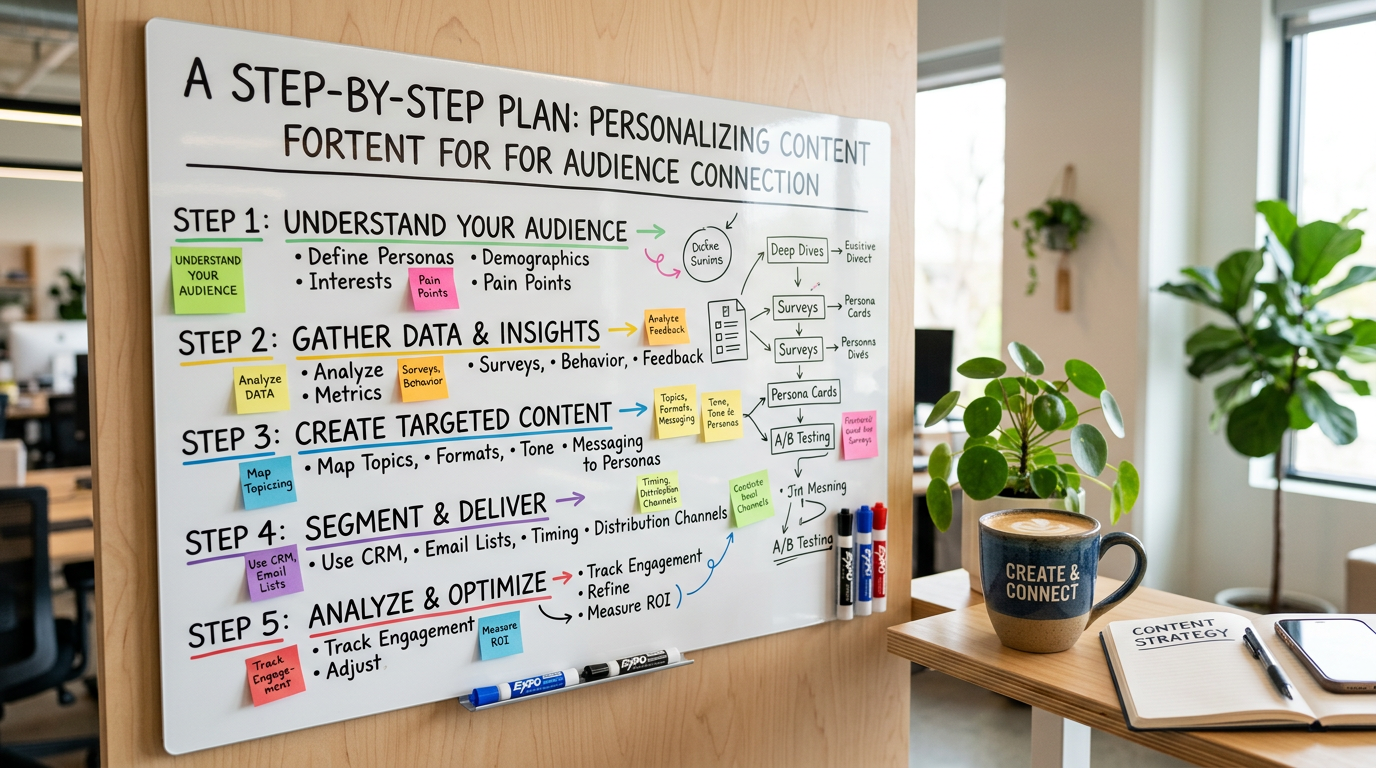
Content strategy planning board
Make the Shift from Broadcasting to Connecting
Personalization isn't an optional feature anymore. It's exactly what modern audiences demand. You don't need massive budgets or huge marketing teams to succeed. You just need a solid strategy and the right tools in your toolkit.
Start small today. Audit one single content pillar. Segment one specific audience group. You'll quickly see that the difference between merely posting and truly connecting is personalization.
Ready to transform your content strategy? Start by reviewing your last ten posts. Ask yourself which ones felt personal and which ones felt like filler. Use platforms like Repostra to streamline the technical side of curation. Let the software handle the heavy lifting so you can focus on what really matters. Build those real connections with your audience and watch your brand grow.