Harnessing User-Generated Content: A Fresh Approach to Authenticity
Explore how user-generated content can boost brand trust and expand your content marketing strategy.
Why User-Generated Content Is No Longer Optional in 2026
Imagine a company spending fifty thousand dollars on a polished advertising campaign. The lighting is perfect. The script is tight. The actors look flawless. The result is modest engagement and a disappointing return on investment. Across town, a real customer uploads a shaky smartphone video of themselves using that exact same product in their messy kitchen. That video goes viral with zero budget behind it.
This scenario plays out every single day across the digital landscape. Consumers have reached a tipping point with traditional corporate messaging. Research shows that 92 percent of consumers trust peer recommendations over standard brand advertising. Despite this clear preference, many businesses still rely on manual tracking methods. They end up missing up to 30 percent of their organic mentions. They are leaving powerful marketing assets completely untapped.
By 2026, user-generated content is no longer an optional tactic or a fun experiment. It is foundational marketing infrastructure. You need a systematic approach to capture, curate, and deploy these assets. This process builds authentic connections and creates a sustainable engine for growth.
Why User-Generated Content Has Become Marketing's Most Valuable Asset
User-generated content has completed a massive evolution over the last few years. It transitioned from a casual social media tactic to an essential business strategy. Traditional advertising faces a serious trust deficit. Audiences are tired of being sold to. They scroll right past polished graphics and ignore expensive commercials.
The data backs up this shift. Posts featuring real customers earn roughly 6.9 times more engagement than standard branded content. People want to see how an item fits into daily life before they commit their money.
The Authenticity Advantage
Consumers today view perfection with deep skepticism. Gen Z buyers lead this trend. A perfectly lit studio shot feels entirely artificial to them. A slightly grainy photo of a customer unboxing an item feels real.
Raw and unfiltered content acts as proof of life for your brand. Buyers want to see real people facing real problems and finding actual solutions with your product. Brand authenticity builds an immediate bond that no amount of clever copywriting can replicate.
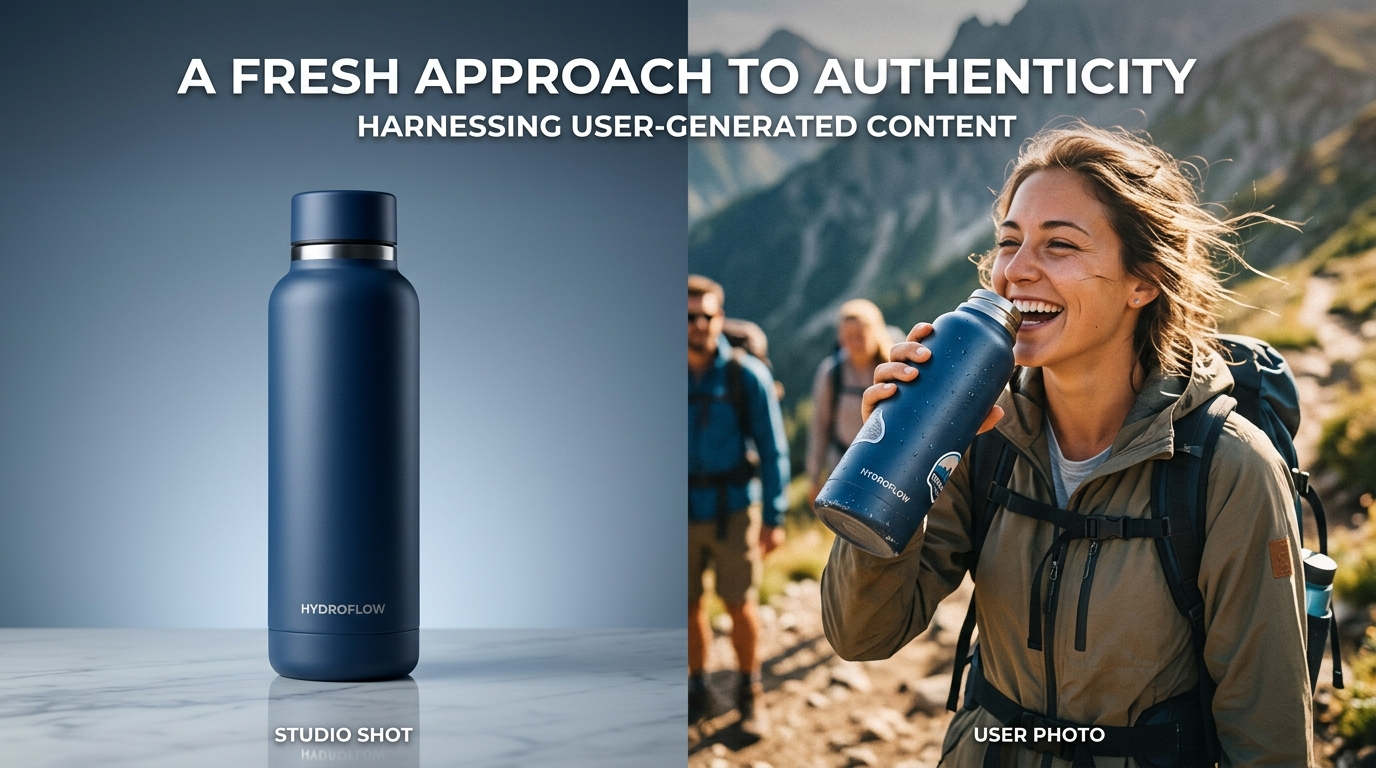
A visual comparison highlighting the difference between polished corporate advertising and authentic user-generated content.
From Marketing Tactic to Business Infrastructure
Leading brands no longer run isolated campaigns based on user submissions. They treat community content as a permanent operating system. This marks a profound shift in how marketing departments allocate their daily resources.
Instead of treating customer photos as an afterthought, companies build entire workflows around them. The global market for these software platforms reflects this change. Industry projections show the sector could reach approximately $12 billion by 2030. That kind of growth signals a permanent shift in corporate spending toward community-driven media.
The Conversion Power of Real Customer Stories
Getting likes and shares is great for visibility. Driving revenue is what actually keeps the lights on. Real customer stories deliver hard numbers on the balance sheet. This material performs exceptionally well at the very bottom of the marketing funnel. Social proof at the point of decision removes lingering doubts.
Where UGC Drives the Most Impact
Product pages and landing pages are the heavyweights for conversion optimization. Displaying a customer photo right next to the checkout button works wonders. Product pages featuring this material can see significantly higher conversion rates than those without it. Some studies point to substantial increases in revenue per visitor when shoppers interact with customer media.
The impact extends well beyond your main website. Email marketing campaigns see higher click rates when they feature real customers. Paid social advertising performs better when you use a customer video as the actual ad creative. Social search is also reshaping how people find products. Platforms like TikTok and Instagram now function like search engines. Brands that display real experiences rank higher and get discovered faster.
When Customers Become Brand Ambassadors
Consumers rarely buy a product purely for its utility anymore. They use brands to signal their own life stages and personal values to the world.
When a brand reposts a customer's photo, it validates that person's identity. This creates a deep level of community loyalty. The featured customer becomes a vocal ambassador. A ripple effect occurs because their friends and followers see the feature and want to participate as well.

People sharing content on smartphones representing community brand loyalty.
The Operational Gap: Why Manual Monitoring Is Leaving Money on the Table
Most marketing teams face a surprising paradox today. They do not struggle to create content. They struggle to find and manage the amazing material their buyers already create. This operational gap represents a massive lost value problem for businesses of all sizes.
Stop Creating, Start Curating
Your buyers are already out there taking photos, writing reviews, and filming videos. Trying to constantly produce fresh in-house media is a drain on your resources. It exhausts your creative team and depletes your budget rapidly.
The solution requires a simple mindset shift. You need to stop creating everything from scratch and start curating. Your community is essentially an unpaid production team working around the clock. Your job is to find their best work and give it a wider audience. Content curation is much more efficient than content creation.
Bottlenecks Holding Brands Back
How much revenue is slipping through your fingers simply because you missed a tag? Missing 30 percent of organic mentions means you are literally losing money. Three specific bottlenecks typically hold teams back from fixing this issue.
Discovery is the first major hurdle. Finding relevant mentions across multiple platforms takes hours of tedious manual scrolling.
Permission is the second obstacle. Navigating digital rights and proper attribution requires time and care. Sending direct messages and tracking responses in a spreadsheet quickly becomes a logistical nightmare.
Deployment is the final challenge. Getting that approved photo formatted and pushed into your marketing channels takes technical effort. This friction is where systematic management tools become absolutely critical to your success.
How Smart Brands Harness User-Generated Content in 2026
Building a successful UGC strategy requires a practical framework. Modern technology allows companies to scale their authenticity without losing the human touch. The most effective programs combine smart software with solid ethical practices.
Systematic Discovery
You cannot rely on manual searches anymore. You need proper tools to automate social listening across all major platforms. Track your branded hashtags carefully. Monitor your direct mentions. Look for untagged visual brand appearances where your logo simply shows up in the background.
Ethical Permission Management
You must always request rights before reposting someone's photo or video. Provide proper attribution and tag the original creator. This builds real relationships instead of just extracting value from your fans. Consumers deeply respect companies that treat digital creators fairly.
Strategic Curation
Curation acts as your primary quality filter. Prioritize high quality over sheer quantity. Ensure the selected material aligns with your core values and specific campaign goals. Showcase diverse representation so every potential buyer sees someone who looks like them.
Multi-Channel Deployment
Integrate these authentic stories directly into your website. Feed them into your social media profiles automatically. Drop them into your weekly email newsletters. Use them as raw creative assets in your paid advertising campaigns. You can even project them onto in-store visual displays for your retail shoppers.
The AI Advantage
Modern marketing teams rely heavily on AI and community media working together. Smart AI systems now analyze thousands of customer posts to determine which specific visual elements convert best.
These tools can automatically generate suggested captions for your reposts. They offer analytics to tell you how a video will likely perform before you hit publish. The technology handles the heavy lifting and data sorting. The human team still matters for making the final creative decisions.

A digital interface demonstrating AI analyzing and curating social media content.
Building a Community First Culture
None of this works if your fans do not post anything. You have to build a culture that actively encourages participation. Promote clear branded hashtags across all your physical and digital touchpoints.
Design your physical products and shipping packaging to be naturally shareable. Create unboxing experiences that people actually want to film. Recognize and reward your top contributors with exclusive perks or simple public shoutouts. Make it incredibly easy for your buyers to participate in your brand story.
Overcoming Common User-Generated Content Challenges
Transitioning to a curation model naturally brings up a few common concerns. Marketing directors often worry about losing control of their corporate narrative. Addressing these objections head-on reveals that the benefits far outweigh any perceived risks.
Encouraging Reluctant Customers
What happens if customers simply do not post about your products? You solve this through proactive encouragement and targeted campaigns. Running specific contests gives people a clear reason to pick up their phones and share.
The compounding effect is very real here. When you start featuring the few people who do post, others immediately take notice. They realize that sharing a photo might get them featured on your official page. This social motivation quickly snowballs into a steady stream of fresh customer content.
Maintaining Quality Control
Handing the camera to your community might sound terrifying to a strict creative director. You maintain quality control by setting very clear internal guidelines. Curation is your ultimate safety net.
You do not have to repost everything you are tagged in. You select only the pieces that strike the right balance between raw authenticity and acceptable brand standards. A slightly blurry photo that perfectly captures pure joy is often much more valuable than a crisp, boring product shot.
Handling Negative Content
Every business eventually faces public criticism online. How you handle negative feedback determines your long-term reputation. Transparency builds lasting brand trust.
Responding professionally and empathetically to a poor review shows future buyers that you actually care. You can use this constructive feedback to directly improve your product line. An imperfect review profile is actually much more believable to shoppers than a page with nothing but five-star ratings.
Finding the Time to Manage Everything
The most common objection is a simple lack of time. Marketing teams are already stretched incredibly thin. This is exactly why the efficiency case for systematic tools is so strong.
You have to balance software automation with genuine authenticity. Platforms like Repostra.app specifically bridge this operational gap. By streamlining the entire workflow from discovery to permission and deployment, these tools eliminate tedious manual labor. You get the authentic community voice without sacrificing your team's valuable bandwidth.
Getting Started With Your UGC Action Plan
Reading about theory is helpful. Taking immediate action is what actually drives business growth. You can start building your community-driven engine today.
Immediate Actions for This Week
Start by auditing your current mentions and tags across all your active platforms. Identify five to ten high-quality pieces of existing media that you have not utilized yet. Reach out to those specific creators directly to ask for permission to repost their work. This quick win proves the concept to the rest of your team.
Short Term Strategy for This Month
Launch a dedicated branded hashtag campaign. Set up active monitoring for your key terms and industry tags. Establish a standardized permission request template so your team knows exactly what to say when reaching out. Designate one specific person on your staff as the primary curator to ensure accountability.
Long Term Infrastructure for This Quarter
Implement a systematic management workflow. Integrate this community media across all your major marketing channels. Focus heavily on upgrading your product pages first. Measure the performance meticulously. Track your engagement metrics, conversion rates, and overall return on investment. Scale up the specific tactics that work best for your unique audience.
Essential Tools and Resources
You cannot do this effectively with basic spreadsheets and manual direct messages. Tools like Repostra.app simplify the entire journey. They help you discover the valuable content you are currently missing and automate the entire permission process. The core value is simple. You are capturing organic endorsements before they fade into the noisy digital background.
Authenticity as Your Competitive Advantage
The digital landscape in 2026 is crowded and extremely noisy. User-generated content serves as the vital bridge between your corporate messaging and actual consumer trust. The brands that win in this environment are the ones that actively elevate their customers' voices above their own.
Implementing this strategy is not about replacing your talented creative team. It is about amplifying the goodwill that already exists out there in the wild. The operational efficiency of systematic management allows you to do this at scale without burning out your staff. Start small if you need to. Just make sure you start now. Every single day you wait to implement this process, valuable organic endorsements slip away.
The most powerful marketing material you will ever deploy does not come from your internal team. It comes directly from the people who buy your products. Your true job is to listen closely, curate carefully, and share their authentic stories with the world.