Content Ops for Small Teams: Do More Without Hiring
Focus on lightweight systems that help lean marketing teams produce and distribute content consistently. This angle is practical, relatable, and ideal for businesses looking to grow without adding complexity.

Content Ops for Small Teams: How to Scale Without Hiring in 2026
Content ops for small teams in 2026 is about orchestrating better, not creating more. Lean marketing departments face massive demands but are actively avoiding the trap of simply adding headcount. They rely instead on lightweight systems like modular content strategies, targeted AI augmentation, and standardized workflows. Treating content as a media operation allows a small group to multiply output, minimize burnout, and maintain quality without complicating the organizational chart.
Key Takeaways
- Repurpose one anchor asset into several smaller pieces rather than starting from scratch.
- AI tools save significant production time when applied to research and tagging.
- Standardized intake forms prevent scope creep and endless revision cycles.
- System optimization consistently beats hiring for meeting increased content demand.
- Strategic repurposing delivers measurable returns in saved time and visibility.

Small marketing team planning content ops on a whiteboard
What Is Content Ops for Small Teams?
Content ops stands for content operations. It covers the workflows, systems, and processes that help teams plan, produce, distribute, and measure content. For small teams, this is not about buying massive enterprise software suites. It is about applying a lightweight discipline to your daily work.
The focus shifts away from running a chaotic factory. You adopt a media company mindset instead. Lean operations rely on orchestration, intelligent automation, and workflow standardization to keep everything moving smoothly.
Why Do Lean Teams Avoid Simply Hiring More Writers?
Many leaders assume that more content requires more people. This hiring trap ignores the hidden costs of coordination. Adding headcount increases overhead and communication friction, which rarely leads to a proportional increase in output.
According to Adobe's 2025 Digital Trends report, 96% of marketers say content demands have increased significantly. The real bottleneck is rarely a lack of typing speed. The core issues are disorganized workflows, content silos, and a failure to repurpose existing material.
Teams easily fall into a burnout loop. They churn out brand new assets while extremely valuable research sits forgotten in a shared folder. Modern discovery landscapes driven by AI search require a high volume of diversified formats. You cannot meet that need just by typing faster.
What Are the Core Pillars of Lean Operations?
Successful lean teams rely on specific levers to multiply their output. Each of these pillars compounds the value of the work you already do. They focus on systems rather than relying purely on software.
Content Orchestration Through Modular Strategy
Smart teams create fewer high-value anchor assets like research reports, deep-dive articles, or webinars. They then break each anchor down into a dozen smaller pieces. A single guide becomes eight social posts, three email newsletters, a video script, and a slide deck.
Start by aligning these anchor themes with your business priorities rather than reacting to random sales requests. This modular strategy builds a unified narrative across all your channels. It ensures you maximize the value of your most resource-intensive projects.
How Can AI Augment the Writing Process?
AI handles the routine tasks so humans can focus on strategy. In 2026, practical applications for small teams involve automated asset tagging, research summaries, and generating headline variations. You want efficiency, not a complete replacement of your human writers.
According to McKinsey's 2024 State of AI report, organizations using generative AI for marketing report productivity gains of up to 40% in content creation tasks. Humans must always handle the final quality control, brand voice, and strategic direction. AI works best as a tireless research assistant.
Standardize and Automate Workflows
A unified content intake system changes everything. Standardized request forms prevent scope creep and keep expectations clear. When everyone uses the same process, you eliminate the endless back and forth emails.
Workflow automation connects your tools. You can use simple integrations to push approved drafts directly to social channels or trigger email campaigns. Standard operating procedures reduce decision fatigue and keep the whole team moving fast.
How Does Repurposing Fit Into Content Operations?
Repurposing serves as the backbone of sustainable production. You shrink and shift your concepts. You break down a large whitepaper and shift the formatting to fit LinkedIn, Instagram, or a targeted email.
A 2024 Semrush survey found that 69% of marketers repurpose their content, with the primary benefits being time savings and increased reach. Strategic reformatting is entirely different from lazy cross-posting. You adapt the tone and format for the specific context of each platform. This ensures the message resonates locally while the core idea remains consistent.
What Tools Help Small Teams Run Content Systems?
You need distinct categories of tools to manage a modern workflow. Pick a few core tools and master them before adding more complexity to your stack.
| Tool Category | Purpose | Example Applications |
| --- | --- | --- |
| Content Planning | Organizing calendars and tracking status | Notion, Airtable |
| Orchestration | Distributing and repurposing assets | Repostra.app |
| AI Assistants | Researching and formatting text | ChatGPT, Claude |
| Automation | Connecting software and moving data | Zapier, Make |
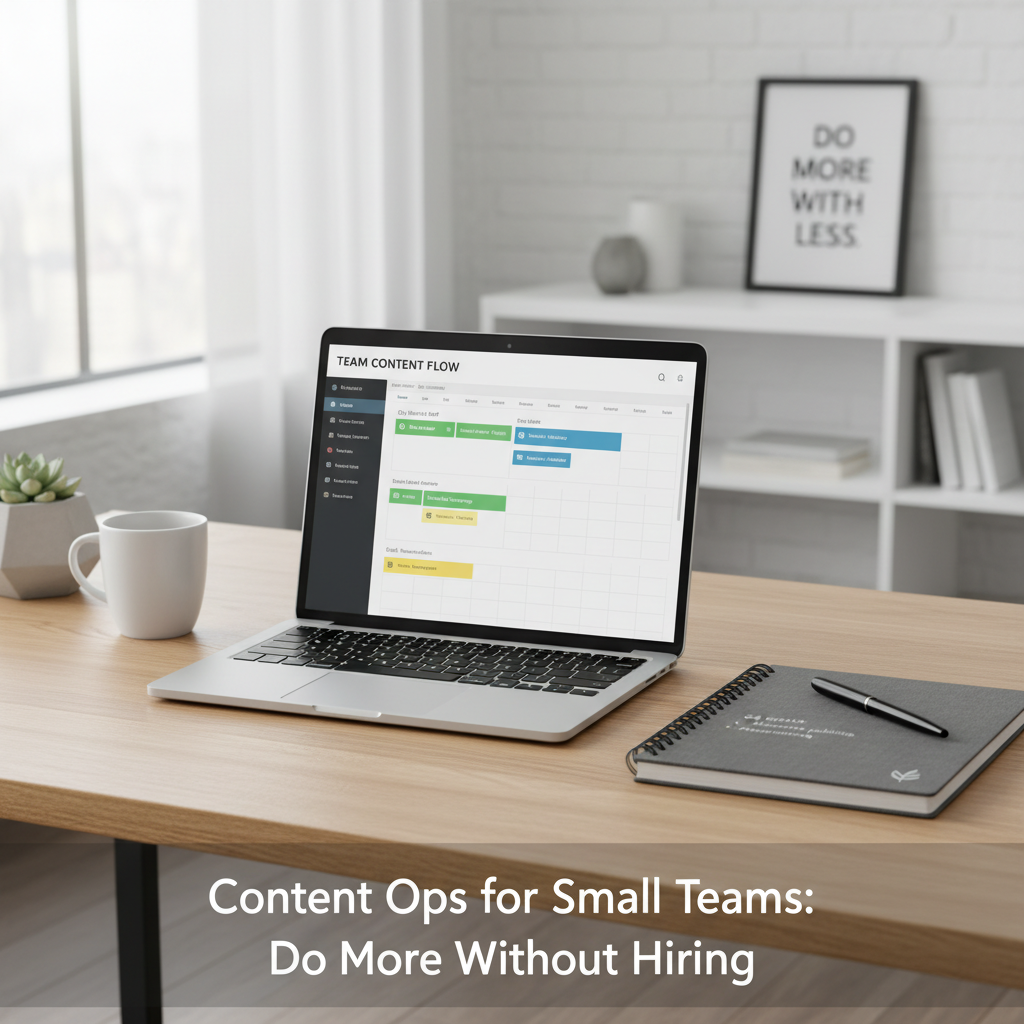
Tools and software setup for managing content operations
Tools like Repostra.app help teams distribute and repurpose visual and written assets efficiently. Repostra acts as the engine for content orchestration without requiring complex enterprise software. You should carefully distinguish professional orchestration platforms from basic consumer repost apps. Budget-friendly options allow you to build a highly effective tech stack.
How Do You Get Started With Content Ops?
Implementing a new system feels overwhelming if you try to change everything at once. You can follow a simple roadmap to build your operational muscle.
Audit Your Existing Content
Identify your top performing assets from the past year. Note their formats, topics, and distribution channels. Tag them based on their potential for immediate repurposing.
Choose an Anchor Asset Format
Pick the one format your team already creates well. Plan a single project where you create the anchor and map out derivative pieces. Start putting your atomization strategy into practice.
Standardize Your Intake Process
Create a simple form for all new content requests. Define your approval workflow and set very clear turnaround expectations for the rest of the company.
Automate a Repetitive Task
Pick the administrative chore that wastes the most time. Implement one automation or AI assist to handle it. Measure the hours you save over the next month.
What Results Do Lean Teams Achieve?
Better systems yield dramatic improvements within a few months. A typical team often scales from publishing a handful of assets a month to dozens.
"Strategy sets the direction for content creation. Content operations is the engine that makes the strategy work."
Andi Robinson, Owner at Hijinx Marketing, via Content Marketing Institute.
The time spent on each individual piece drops significantly. Engagement usually increases because the messaging remains highly targeted and consistent across all touchpoints.
What Are Common Content Ops Mistakes?
Trying to implement every automation at once is a recipe for disaster. Start with one pillar and master it. Over-relying on AI without human oversight will destroy your brand voice. Maintain strict quality control on everything you publish.
Repurposing without adaptation will hurt your reach. Always tailor the formatting to match the specific expectations of the platform. A LinkedIn post needs a different structure than an Instagram caption, even if they share the same core idea.
Start Small and Scale Smart
Content ops for small teams demands sustainable progress over immediate perfection. Start with one anchor asset, one workflow improvement, or one new automation this week. Your team can double output without doubling stress. Tools like Repostra.app can streamline the distribution process as you build your operational muscle.
FAQ
How much time does content ops save small teams?
Most teams report saving 30-50% of production time per content piece once systems are fully implemented. The benefits usually become obvious within three to six months. The fastest gains come from standardizing workflows and repurposing older material before trying advanced automation.
Do I need expensive tools to run content ops?
No. Many successful lean teams start with free or low-cost tools like Google Drive, Notion, and standard AI assistants. The underlying system always matters more than the specific software you purchase.
Can AI really replace a content hire?
AI augments your existing team but cannot replace strategic thinking or brand expertise. You should use AI for research, drafting, and tagging. Keep your human writers in charge of final quality, creative direction, and strategy.
What is the difference between content ops and content marketing?
Content marketing defines the strategy and the execution required to achieve business goals. Content operations is the structural backbone. It covers the specific workflows and processes that make your marketing scalable and sustainable.
How do I convince my boss we do not need to hire more people?
Present a small pilot project. Take one high-value asset, repurpose it into a dozen smaller pieces, and track the performance. Show leadership that optimizing your systems delivers more output than adding overhead.