AI-Powered Social Listening: Transform Feedback into Content Gold
Learn how AI-driven social listening tools can transform user feedback into valuable content marketing assets.

AI-Powered Social Listening: Turn Customer Conversations into High-Performing Content in 2026
AI-powered social listening in 2026 goes far beyond tracking brand mentions. It transforms raw user feedback into valuable content assets. By using artificial intelligence to cluster conversations into themes like customer pain points and success stories, marketers create authentic content that resonates. With 62% of marketers prioritizing social listening according to Coherent Market Insights, and 44.7% reporting that AI-assisted content outperforms traditional approaches per Sociality.io, this strategy turns everyday online conversations into your most powerful marketing engine.
Key Takeaways:
- AI social listening spots content opportunities by clustering user feedback into actionable themes
- AI-assisted content outperforms traditional content for 44.7% of marketers due to increased relevance
- The Anchor Strategy transforms feedback into multiple distinct, high-performing content formats
- Conversational search on social platforms makes listening essential for modern keyword discovery
- Human and AI collaboration works best to maintain authentic brand voice and accuracy
What hidden opportunities exist in your direct messages?
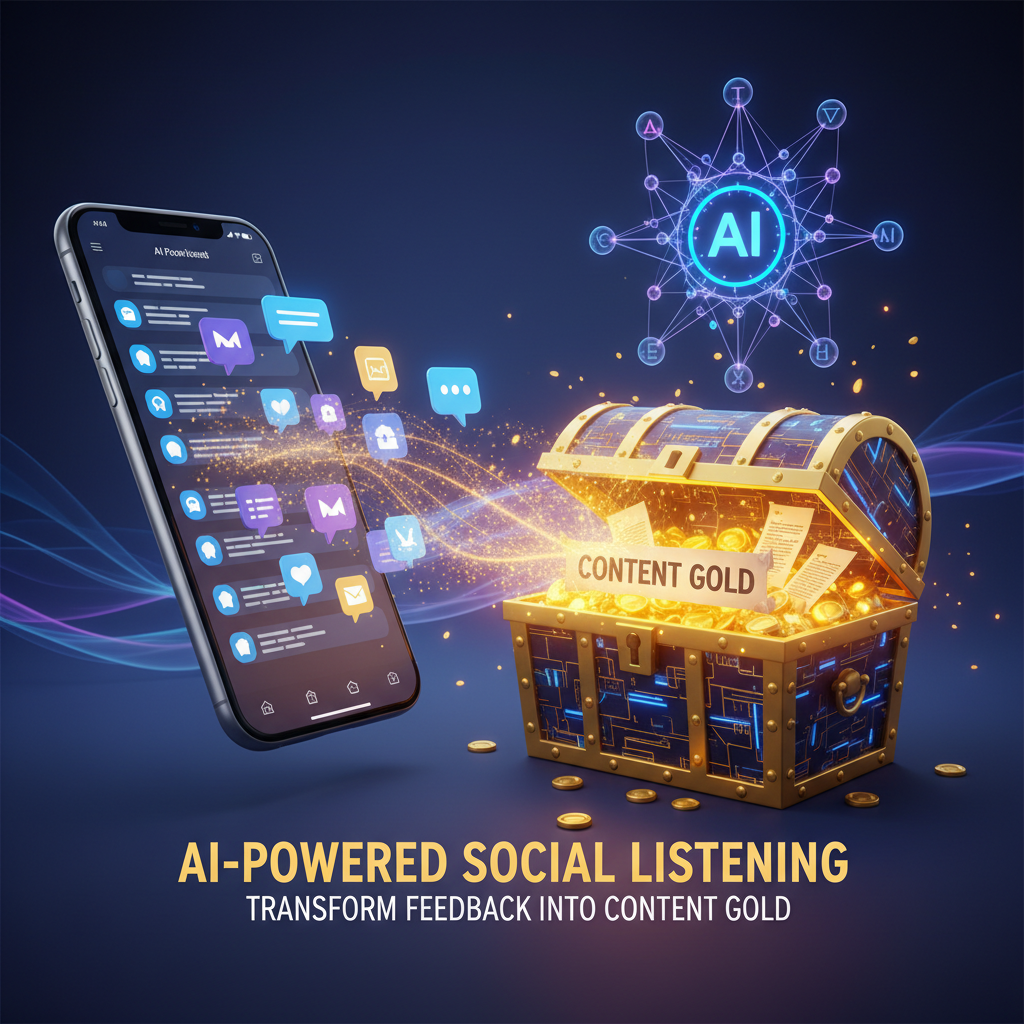
Social media direct messages turning into gold
A brand receives hundreds of comments, direct messages, and reviews every week. The marketing team struggles to know which conversations contain actual value. They either ignore this feedback or manually sift through it. Both approaches waste money and miss great opportunities.
AI-powered social listening automatically identifies the most valuable conversations and turns them into content. According to Coherent Market Insights in 2026, the global social media listening market is reaching $11.91 billion. This growth happens because 62% of marketers now prioritize social listening as a core strategy. You can learn the exact framework top brands use to stop drowning in feedback and start publishing high-performing content.
What is AI-powered social listening and why is it not just monitoring?
AI-powered social listening analyzes online conversations to extract actionable insights. It acts as a proactive content engine rather than a passive alert system.
Traditional monitoring simply counts mentions and tags. Modern AI platforms use pattern recognition, theme clustering, and predictive insights to understand the context behind the words. They spot emerging trends before those topics go mainstream.
The technology saves immense effort. According to a 2026 Hootsuite industry report, 71.1% of social media marketers report time savings as the biggest AI benefit. This allows teams to focus on strategy instead of manual data entry.
Why does social listening matter for content marketing today?
Audiences now use social platforms as primary search engines. Users type questions directly into TikTok and Instagram. Social listening is the only way to discover these conversational search queries.
Buyers crave content based on real experiences. They ignore polished corporate messaging. Brands that listen closely create content that answers real human questions.
Content rooted in user feedback converts at a higher rate. According to Sociality.io in 2026, 44.7% of marketers report that AI-assisted content directly outperforms traditional content.
"Monitoring will be a fuel for AI visibility. Social monitoring will be integrated into AI visibility strategies, helping marketers identify and activate high-impact conversations that shape algorithmic brand understanding."
— Michał Sadowski, CEO of Brand24
What types of content gold hide in user feedback?
You can categorize almost all useful customer feedback into three distinct buckets.
Hacks (Unexpected Product Uses)
Creative ways customers use your product that you never anticipated. These mentions make perfect tutorial videos and user spotlight stories.
A fitness app team discovered users tracking meditation streaks instead of workouts. They quickly built a campaign around mental wellness.
Hardships (Pain Points and Objections)
Customer struggles, hesitations, or complaints. You can turn these directly into educational guides or comparison charts.
A software company found users confused about their pricing structure. They used that exact feedback to script an explainer video series.
Happiness (Success Stories and Advocacy)
Customer wins, testimonials, and organic praise. These conversations fuel case studies and social proof campaigns.
An e-commerce brand detected a glowing review in a niche forum and turned it into a high-converting video testimonial.
How does AI transform raw feedback into publishable content?
Centralize the raw data. You need to pull messages, comments, and reviews into one dashboard. Platforms like Repostra.app help aggregate and curate this user-generated content efficiently.
Cluster the feedback into themes. Natural language processing spots the repeating patterns. Sentiment analysis categorizes the emotional tone.
Generate the first draft. The AI uses your clustered themes as content briefs. It instantly writes blog outlines, social captions, and email drafts based on real customer words.
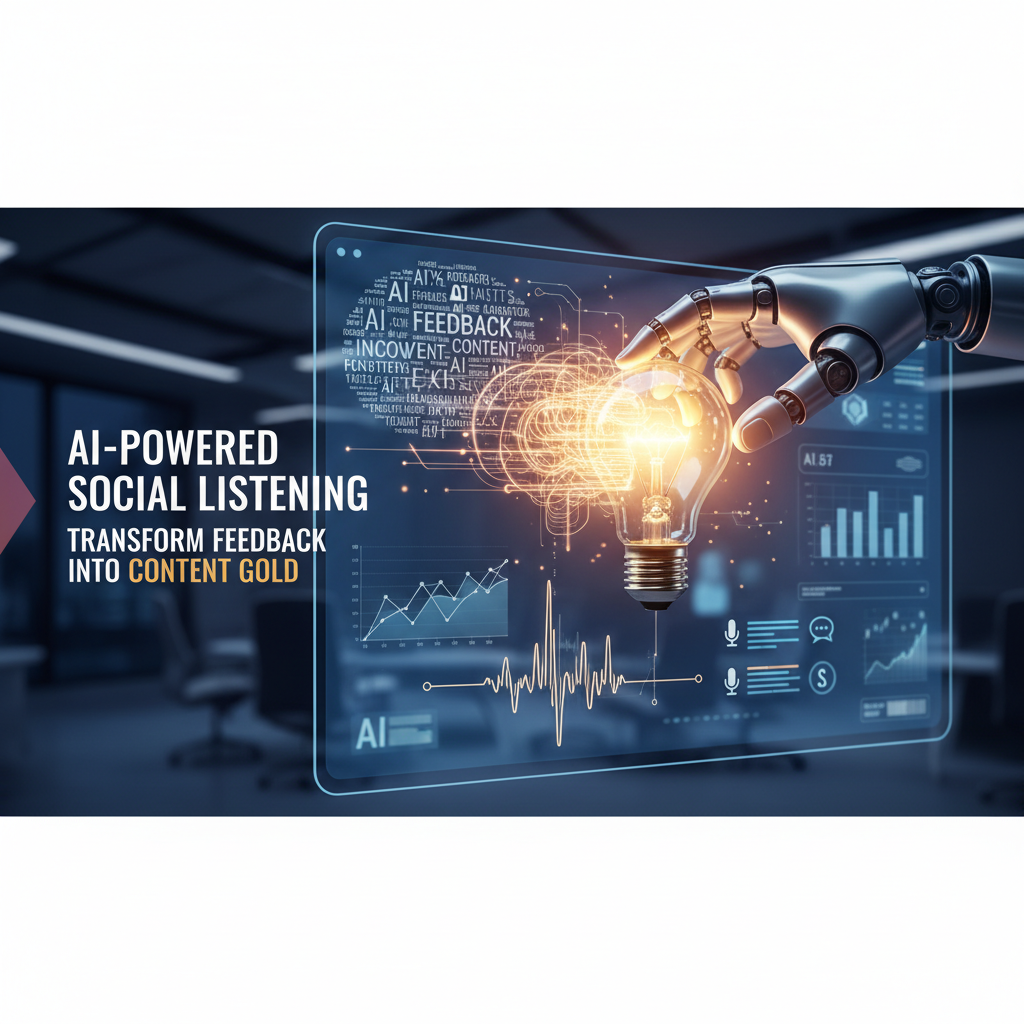
Human and AI collaborating on content strategy
Apply human refinement. AI builds the structure, but humans provide the soul. According to a 2026 CMSWire survey, 78.4% of social media marketers apply moderate to extensive human editing to AI content. This step ensures strict brand voice alignment.
The Anchor Strategy: How can you turn one piece of feedback into multiple content assets?
You do not need thousands of comments to build a content strategy. You only need one great conversation.
The process:
- Identify the anchor: Choose one high-value piece of feedback
- Create the pillar: Write a comprehensive article addressing the topic
- Atomize for social: Break that article into short video scripts and text posts
- Repurpose for email: Turn the core lesson into a newsletter segment
- Close the loop: Share the final content with the original user who provided the feedback
A customer tweets about solving a specific workflow problem using your tool. You write a blog post about their method. You then film six short social clips based on the post. Finally, you launch an email campaign featuring their story. Repostra.app excels here by detecting the initial valuable content and helping you repurpose it authentically across your channels.
What tools do you need for AI-powered social listening?
Enterprise platforms like Talkwalker and Hootsuite dominate the top tier. They offer multi-platform monitoring, deep sentiment analysis, and visual recognition. Talkwalker specifically scans millions of sources globally.
Many modern platforms now integrate language models directly into the listening dashboard. They read the detected trends and instantly draft appropriate responses.
| Tool Category | Primary Function | Best For |
| :--- | :--- | :--- |
| Enterprise Listening | Global theme clustering | Large budgets, global teams |
| Mid-Market Platforms | Keyword tracking | Growing marketing teams |
| Curation Tools | Repurposing feedback | Authenticity-focused brands |
Look at platform coverage first. Ensure the tool monitors the specific networks where your audience actually talks. Check if the AI uses true theme clustering instead of basic keyword alerts.
How do you maintain authenticity when using AI for content?
AI-generated content often feels generic without human oversight. The solution is using AI to find out what to say based on real feedback. Human writers then determine how to say it.
Always attribute the source. When you use customer feedback, credit the user if you have permission. This proves you actively listen to your community.
Fact-check rigorously. AI can misinterpret sarcasm or complex complaints. Human review prevents embarrassing brand missteps.
Converting feedback into content builds immense community loyalty. Your audience sees themselves reflected directly in your marketing materials.
What mistakes should you avoid with social listening content?
Treating social listening as a one-way street is a major misstep. You must engage with the original posters. Never take their feedback and ignore them.
Over-relying on artificial intelligence creates problems. Skipping human review leads to off-brand messaging. Always remember the rule of applying moderate to extensive human editing.
Ignoring negative feedback entirely wastes valuable opportunities. Complaints represent your most valuable educational content opportunities. Address hardships head-on to build trust.
Focusing only on your own brand mentions limits your insights. You will miss massive industry trends if you only track your company name. Expand your tracking to broad industry questions.
What does success look like for modern brands using social listening?
Brands using this framework produce significantly more assets from fewer ideas. The process reclaims hours of brainstorming time every week.
AI-assisted content rooted in actual feedback naturally performs better. It speaks directly to verified market interests rather than internal assumptions.
Expect a learning curve. Most teams need a month or two to refine their dashboards and set up the right alerts. The return on investment usually becomes obvious within the first quarter.
An e-commerce brand recently transformed common support ticket themes into an educational video series. They reduced overall support volume while simultaneously increasing their social engagement.
FAQ
How much does AI-powered social listening cost?
Pricing varies widely based on your scale. Basic tools start around $99 per month for small businesses. Enterprise platforms like Talkwalker and Hootsuite range from $500 to over $5,000 monthly depending on data volume. The return on investment typically shows up in saved time and higher content conversion rates.
Can small businesses use AI social listening?
Small businesses can absolutely benefit from this technology. They are often closer to their customers and can act faster than large corporations. Start with affordable tools or manual listening combined with free AI writing assistants. The Anchor Strategy works perfectly at any scale.
How do you get user permission to turn feedback into content?
You can reference public posts with simple attribution, though notifying the user is courteous. For private feedback like direct messages, you must ask explicit permission before publishing. A simple message asking to share their story builds trust and deepens the relationship.
What is the exact difference between social listening and social monitoring?
Social monitoring tracks direct brand mentions and tags. Social listening analyzes broader industry conversations, competitor mentions, and untagged questions. Listening asks what potential customers care about overall, while monitoring just asks what they are saying about you.
How often should you review social listening data for content ideas?
Top-performing teams review their listening data weekly for content planning. They also set up real-time alerts for rapidly trending topics. Dedicate a few hours each week to review AI-clustered themes and spot your next major content opportunity.