AI and the Art of Personalization in Content Marketing
Discover how AI can be used to tailor content to individual preferences, creating a more personalized user experience.
AI Personalization in Content Marketing: The Complete 2026 Guide
AI personalization in content marketing has evolved from basic segmentation to real-time behavioral analysis. Artificial intelligence now creates unique, context-aware experiences for each individual user. Brands adopting these strategies generate significantly more revenue than competitors who rely on static messaging. Success requires blending automated data analysis with human creativity while respecting user privacy through zero-party data collection and maintaining an authentic brand voice.
Key takeaways:
- Hyper-personalization treats each customer as a unique "segment of one" using real-time data
- Fast-growing companies see 40% more revenue from AI personalization compared to slow adopters (McKinsey & Company, 2026)
- The most effective strategy combines AI efficiency with human authenticity
- Zero-party data is crucial for delivering personalized experiences without violating privacy
Why is traditional personalization failing?
You probably remember when personalization meant adding a first name to an email subject line. That approach is about as effective as fax marketing in 2026. Consumers expect brands to know their preferences instantly.
Generic content gets ignored. The standard for digital experiences is incredibly high. According to DemandSage research from April 2026, 71% of consumers prefer personalized experiences and 76% express frustration when interactions feel generic.
AI personalization in content marketing is now essential infrastructure rather than a luxury. Marketers must shift from mass communication to individualized delivery to stay relevant.
What is AI personalization in content marketing?
Using artificial intelligence to analyze user data and deliver individualized content experiences defines this approach. The marketing industry has moved entirely away from static audience segments. We now operate on the "segment of one" concept.
Basic tactics just swap out text tokens. Hyper-personalization relies on behavioral prediction to serve dynamic content at the exact right moment.
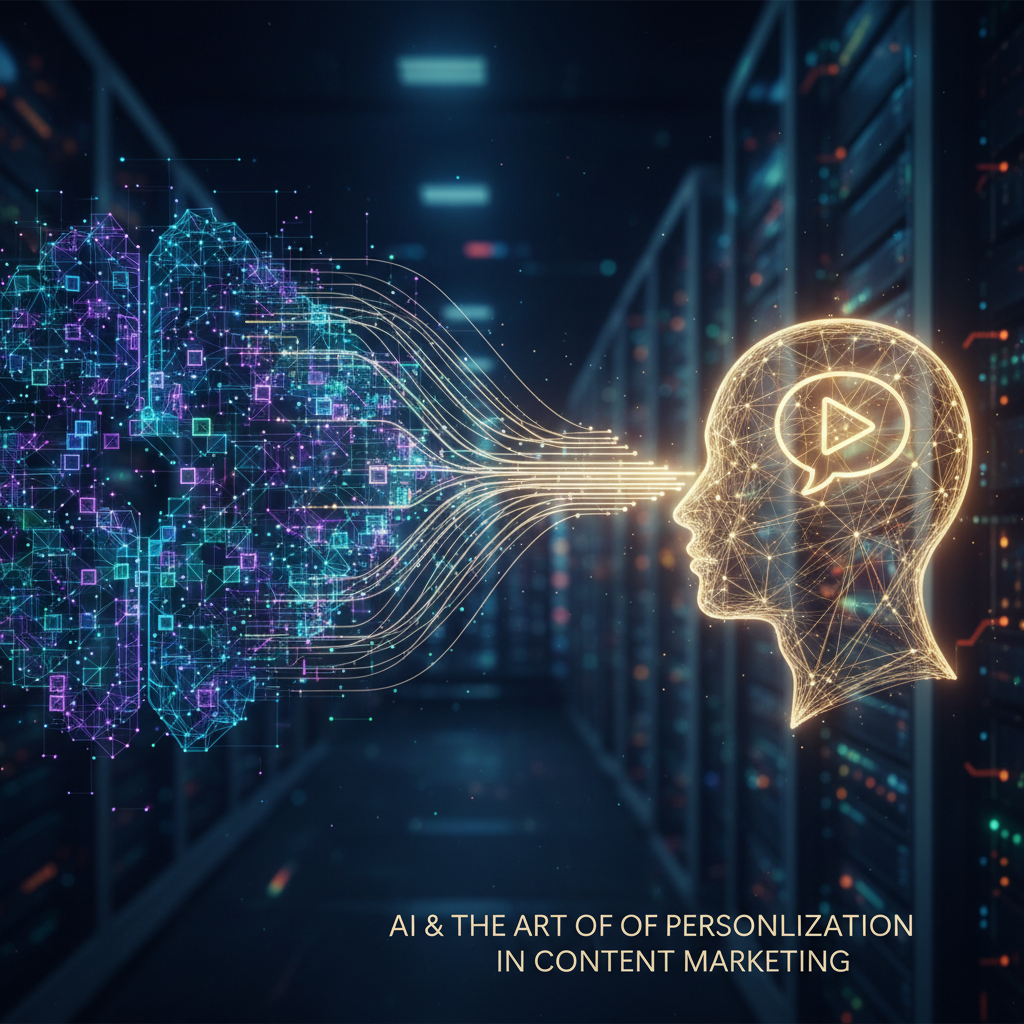
AI analyzing data points to create a unique user profile segment of one
The underlying technology has matured rapidly. According to Master of Code research from April 2026, the industry has shifted from simple generative tools to agentic AI. These autonomous systems execute complex marketing tasks without constant manual oversight.
Why does AI personalization matter for your content strategy?
Generic marketing costs your business engagement, trust, and conversions. AI personalization solves this problem by directly impacting your bottom line and competitive differentiation.
Better content matching means better business outcomes. McKinsey & Company research from 2026 shows that fast-growing companies generate 40% more of their revenue from personalization efforts compared to slower-growing counterparts.
The return on investment is clear. DemandSage reported in April 2026 that 96% of companies say AI has significantly improved their personalization ROI. Gartner research from 2026 found that brands using AI-driven personalization report conversion rate improvements of over 200%.
How does AI actually personalize content?
Machine learning and predictive algorithms form the technical foundation of modern content delivery. These systems process both real-time actions and historical data to understand what a user wants next.
The data inputs include browsing history, engagement signals, purchase patterns, and user-provided preferences. The outputs are specific content recommendations, optimal delivery times, and format adaptations.
Social media tools use context-aware adaptation to choose between a video or a static image based on user habits. Platforms like Repostra.app use predictive engagement to find optimal posting times automatically. AI also generates intelligent captions and automatically formats content for different social channels.
What types of AI personalization work best?
Four primary personalization approaches deliver the best results for marketers right now. DemandSage reported in April 2026 that 92% of businesses currently use AI-driven personalization tactics to reach their audience.
Context-Aware Content Adaptation: AI analyzes past performance to suggest the most effective content types for specific audiences.
Predictive Engagement: Algorithms optimize posting times and tone based on when users are most active.
Intelligent Content Generation: Automated tools draft captions that perfectly match your specific brand voice.
Cross-Platform Transformation: Platforms automatically adapt content formats to fit the unique requirements of different social channels.
How can you implement AI personalization without losing authenticity?
Many marketers worry that automation will make their content feel robotic. The solution is adopting a strict hybrid model combining human oversight with AI power.
AI excels at data analysis, draft creation, scheduling, and pattern recognition. Humans remain essential for maintaining brand voice, driving creativity, and providing ethical oversight. AI handles the efficiency while humans focus entirely on differentiation.
"The most effective strategy in 2026 is a Human-AI hybrid approach. AI handles the heavy lifting of data and distribution, while human input ensures absolute authenticity and maintains the core brand voice."
— Sarah Jenkins, Chief Strategy Officer at Averi AI, 2026
What about privacy and responsible personalization?
Consumers care deeply about their data privacy. This concern has sparked a massive shift toward zero-party data. Zero-party data is information that users intentionally and proactively share with a brand.
Altois research from 2026 shows that 88% of marketers prioritize the collection of zero-party data to maintain personalization without violating consumer trust.
Transparency is now a major competitive advantage. You must use clear opt-ins and disclose exactly how you plan to use customer data. This builds trust while giving you the insights needed for deep personalization.
What results can you expect from AI personalization?
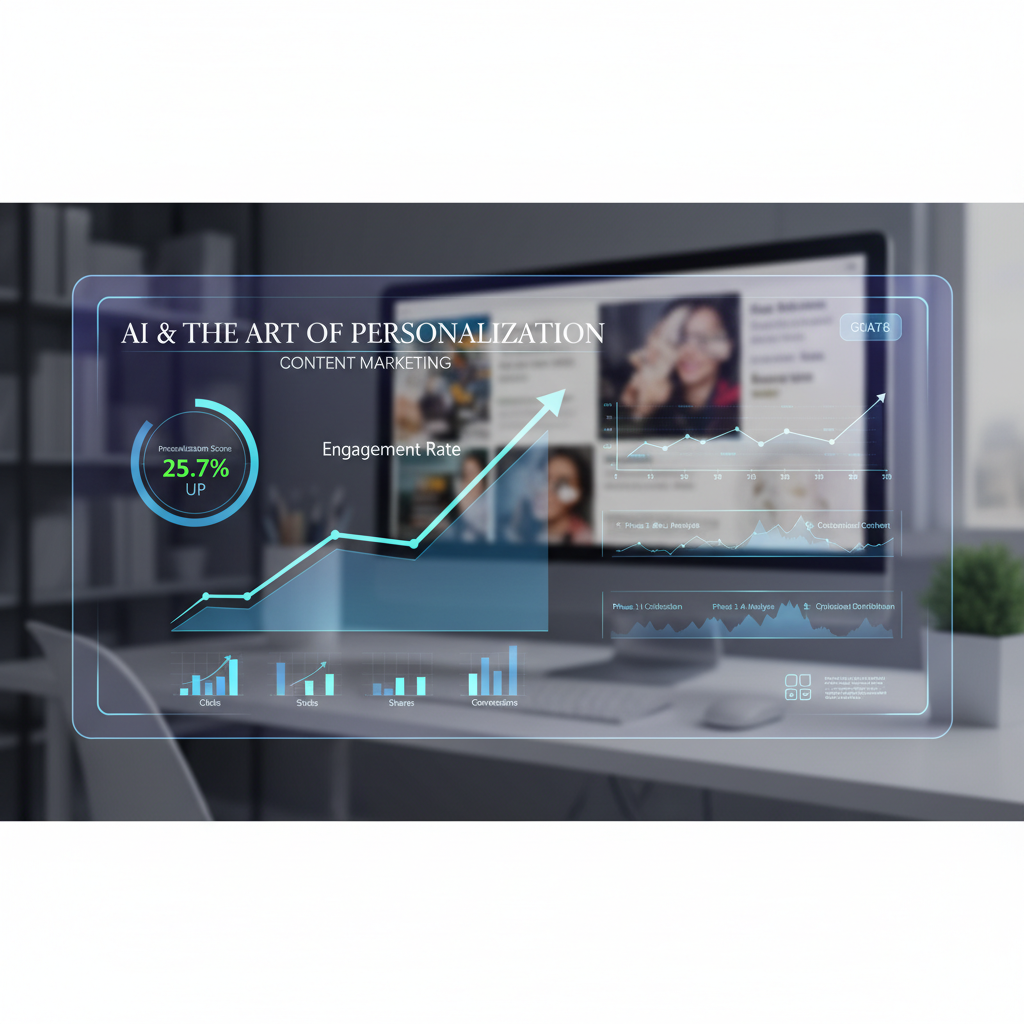
Analytics dashboard displaying rapid growth in marketing ROI and engagement
Initial improvements typically appear within two to four weeks. This happens as AI systems collect fresh data and begin optimizing your content delivery.
Significant results usually require three to six months of consistent use and iteration. Your specific timeline will depend on your data volume and content frequency.
You should track specific outcomes to measure success accurately. Watch your engagement rates, conversion improvements, and total time saved on content creation.
How to get started with AI personalization today
You can build a strong personalization foundation by following a structured implementation roadmap. Start small and expand as you see results.
Step 1: Audit your current content and identify obvious personalization opportunities.
Step 2: Choose AI tools that fit your specific marketing needs and budget.
Step 3: Start your testing with just one channel or one specific content type.
Step 4: Collect and analyze zero-party data through surveys or preference centers.
Step 5: Test your content, measure the results, and iterate based on the data.
Social media management platforms often have these features built right in. You just need to activate them and provide strategic direction.
FAQ
How much does AI personalization cost for small businesses?
Costs vary widely depending on your tech stack. Small businesses can start with affordable tools ranging from $50 to $500 per month. Many social media management platforms integrate these features into their standard pricing tiers.
Will AI replace human content creators?
No. AI enhances human creators instead of replacing them. The technology acts as infrastructure that handles data analysis and initial drafts. This frees up creators to focus on strategy and relationship-building.
What is the difference between AI personalization and regular segmentation?
Traditional segmentation groups customers into broad static categories like age or location. AI personalization treats each person as a unique segment of one. It analyzes real-time behavioral data to create distinct dynamic experiences for individuals.
Do I need technical skills to implement AI personalization?
Not anymore. Most modern marketing platforms offer built-in AI features with highly intuitive interfaces. You need solid content marketing knowledge but absolutely no coding or data science skills.
What is the future of content marketing?
Personalization is essential infrastructure. Brands must adopt these tools or risk falling permanently behind their competitors.
The human-AI partnership will only grow stronger and more sophisticated over time. Evaluate your current content strategy today to find simple personalization opportunities.
This technology empowers you to focus on building authentic relationships at scale. You can let the software handle the delivery while you handle the connection.